
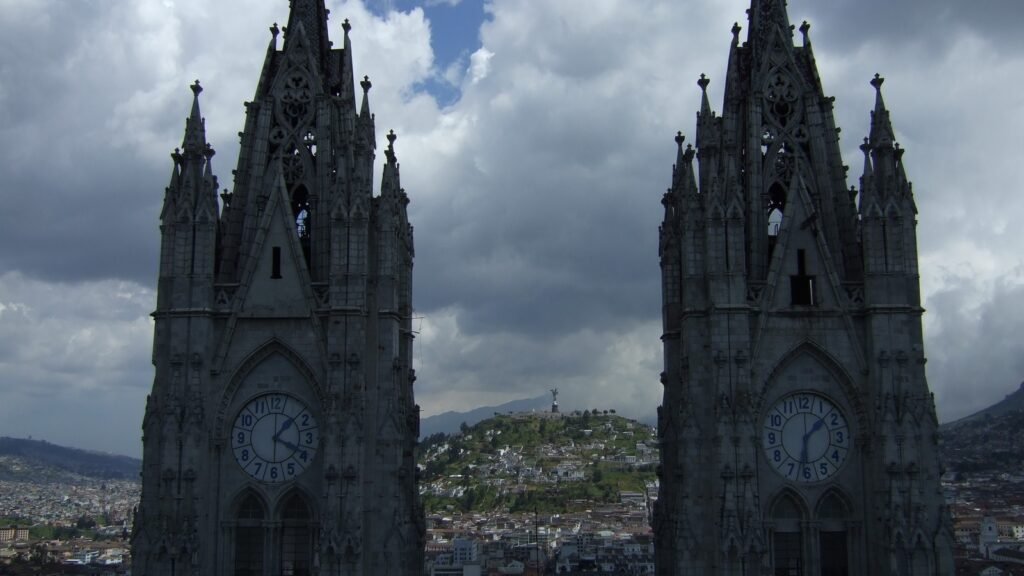
This guide to Ecuador culture and local customs explains the heritage, Indigenous peoples, festivals and everyday etiquette that most visitors notice, along with the legal and safety points that bear on respectful travel.
Ecuador’s culture is shaped by its Andean, Amazonian, coastal and island regions. Ecuador Travel, the official tourism site, says visitors can learn about the worldviews of dozens of Indigenous peoples and nationalities, and it points to heritage cities such as Quito and Cuenca and to Otavalo, which it calls the largest Indigenous market in the region. UNESCO lists five World Heritage properties in Ecuador, and it also recognizes several traditions as intangible cultural heritage.
Because many cultural experiences involve travel to areas with official warnings, read the safety section of our Ecuador travel guide before planning. Where this guide gives etiquette advice that no official source covers, it says so, marks it as our view and keeps it general.
Ecuador Culture and Local Customs: Understanding the Basics
The simplest rule for any visitor is to be a respectful guest, and in Ecuador that includes following the instructions of your host, guide or the local authorities. Canadian advice says to carry valid identification or a photocopy at all times, that penalties for drug possession, use or trafficking are severe, and that foreigners may not take part in political activities. Canadian advice also says same-sex marriage is legal and many legal protections are in place, but attitudes toward same-sex couples can vary between communities.
In our view, a little courtesy goes a long way: greet shop staff and guides before asking for anything, ask before photographing people and accept that schedules can be flexible.
Greetings and Everyday Courtesy
We could not find an official Ecuadorian source on greetings, so we keep this section brief. In our view, a handshake and a “buenos días,” “buenas tardes” or “buenas noches” are safe choices with people you have just met, and you can follow the lead of the person you are meeting if they offer a different greeting. Use “señor” or “señora” until you are invited to use a first name. Say “por favor” and “gracias” often, and speak slowly rather than loudly if you are not understood.
Spanish, Kichwa and Useful Phrases
Spanish is the language you will use in most places, and a few phrases help outside the main tourist areas. Ecuador Travel describes Kichwa communities in the Andes and along the Napo River in the Amazon, and says the Amazon is home to 11 Indigenous nationalities, including the Kichwa, Waorani and Shuar. UNESCO recognized the Zápara language, rituals and oral memory as intangible heritage in 2008, according to Ecuador Travel.
Useful phrases include “¿cuánto cuesta?” (how much is it?), “la cuenta, por favor” (the bill, please), “no entiendo” (I do not understand) and “necesito ayuda” (I need help).
Indigenous Peoples and Respectful Visits
Ecuador Travel names the Kichwa, Waorani and Shuar among the Amazonian peoples and describes Yasuní National Park as home to peoples in voluntary isolation. It says to visit Yasuní only with authorized operators and lodges, and to go with operators who work hand in hand with the communities.
Canadian advice says some Indigenous groups require permits to enter their territory, so check before you enter the Amazon. It also says to be respectful and follow the guidelines of your host or tour guide when visiting an Indigenous community, and to ask about the rules before visiting. It adds that the justice systems of Ecuador’s Indigenous peoples have full legal value and generally operate independently of the national system. In our view, the practical lesson is to treat any visit as an invitation, not a right, and to let communities decide what can be photographed or shared.
Markets and Buying Crafts
Ecuador Travel describes the Plaza de los Ponchos in Otavalo as a textile market where ponchos, scarves and hats reflect generations of ancestral craft, with live musicians and artisans you can speak with directly. It suggests asking artisans where their work comes from. In our view, buying directly from makers, asking before taking photographs and avoiding goods made from protected wildlife are good habits anywhere.
Ecuador Travel also names Cotacachi for leather work, San Antonio de Ibarra for woodwork and Chordeleg for jewelry, pottery and toquilla straw weaving.
Meals, Tipping and Paying
Ecuador Travel describes markets as a daily ritual where you can sit and eat among local people, and our guide to what to eat in Ecuador explains the dishes. We could not confirm the current rules on service charges on an official page, so check your bill before you tip. If a service charge is already included, you do not need to add more.
Canadian advice says the currency is the US dollar and that credit cards are accepted by many businesses, and to have small bills ready for payment in taxis. In our view, carry a mix of small bills for markets and taxis, because change can be hard to find.
Festivals and Public Holidays
Ecuador Travel describes traditional festivals as occasions with their own symbolism, music, dance and food. It names Inti Raymi, the festival of the sun, in June, the Diablada de Píllaro in January, Mama Negra in September and Carnival. It also describes colada morada and guaguas de pan as foods of the Day of the Dead.
Festival dates and public holidays change, and some events cause road closures and crowding. Check an official calendar or ask your hotel before you travel, and book transport and accommodation early for festival weeks. Canadian advice says demonstrations and mass gatherings can occur, so follow local instructions.
Crafts, Panama Hats and Heritage Sites
UNESCO lists five properties in Ecuador: the City of Quito (1978), the Historic Centre of Santa Ana de los Ríos de Cuenca (1999), the Qhapaq Ñan Andean Road System (2014), the Galápagos Islands (1978, 2001) and Sangay National Park (1983). Ecuador Travel notes that the Qhapaq Ñan was inscribed jointly with Peru, Colombia, Bolivia, Chile and Argentina.
Ecuador Travel also describes UNESCO-recognized intangible heritage: toquilla straw weaving (2012), marimba music and dance shared with Colombia (2015), the Zápara language (2008) and pasillo music (2021). It calls the toquilla straw hat, often known as the Panama hat, a cultural and economic symbol for communities in Manabí and Azuay and says Cuenca is known for selling it.
History, Politics and Sensitive Topics
Canadian advice says Ecuadorian law prohibits political activities by foreigners and that you may face detention if you take part in demonstrations or political activities. The FCDO says street demonstrations, protests and strikes are common and can occur without warning, and that even peaceful protests can disrupt travel. Both advise staying away from large gatherings.
Canadian advice describes the state of exception that applies in several provinces and says Ecuador is in a state of “internal armed conflict,” with an increased police and military presence. In our view, visitors should avoid volunteering political opinions, follow instructions from police and soldiers politely and keep identification with them.
Photography and Respectful Travel
We could not find official guidance on photography, so this is general advice: ask before photographing people, especially at markets and in Indigenous communities, and accept a refusal. Do not photograph police, military or security installations. Follow park and museum rules on flash and drones.
In protected areas, Ecuador Travel says to book licensed operators and respect National Park rules, particularly in the Galápagos, and to use reef-safe sunscreen. In our view, leaving wildlife and plants undisturbed is the most respectful way to see them.
Practical Cultural Etiquette for Travelers
Carry identification and keep a copy of your passport, because Canadian advice says local authorities may ask to see ID at any time. Never carry packages for other people, and pack your own bags, because drug penalties are severe and drivers can be held responsible for passengers’ luggage. Canadian advice says women traveling alone may face harassment, so choose accommodation with good security and avoid accepting rides from strangers.
Dress for the climate and the setting: highland weather changes quickly, and Ecuador Travel says to bring layers and a rain jacket. If you are accused of an offence in an Indigenous community, Canadian advice says to ask to speak to community leaders and to ask that your embassy be told.
Ecuador Culture FAQ
What local customs should I know about in Ecuador?
Carry valid identification or a photocopy at all times, because Canadian advice says local authorities may ask to see it, and remember that Ecuadorian law prohibits political activities by foreigners and that penalties for drug offenses are severe. When you visit an Indigenous community, Canadian advice says to follow the guidelines of your host or tour guide and ask about the rules before you go. At the Otavalo market, Ecuador Travel suggests speaking with artisans directly about where their work comes from. We could not find an official source on greetings, so in our view a polite “buenos días” and a handshake are safe choices.
Do I need permission to visit Indigenous communities in Ecuador?
Sometimes. Canadian advice says some Indigenous groups require permits to enter their territory, so check before entering the Amazon, and Ecuador Travel says to visit Yasuní National Park only with authorized operators and lodges and to choose operators who work hand in hand with the communities. Ask your operator about rules on photography and gifts, and treat any visit as an invitation.
When are Ecuador’s main festivals?
Ecuador Travel names Inti Raymi, the festival of the sun, in June, the Diablada de Píllaro in January and Mama Negra in September, plus Carnival, and describes colada morada and guaguas de pan as foods of the Day of the Dead. Dates and local events change, so check an official calendar or ask your hotel before you plan around a festival.
What is the Panama hat and where does it come from?
Ecuador Travel says the toquilla straw hat, often called the Panama hat, is a handcrafted tradition and a cultural and economic symbol for communities in Manabí and Azuay, and that toquilla straw weaving was recognized by UNESCO as intangible heritage in 2012. It says Cuenca is known for selling the hats, and its Andes guide lists Panama hat workshops there and toquilla straw weaving in Chordeleg.
Experience Ecuador Culture Beyond the Sights
The best cultural experiences in Ecuador are often the simplest: a conversation with an artisan, a meal in a market, a festival you happened to arrive for. Plan with respect for the places you visit and for official advice, and remember that culture is lived by people who were here before you arrived.
Read our Ecuador travel guide, what to eat in Ecuador and 10 day Ecuador itinerary to plan your trip. You may also enjoy our guides to Peru’s culture and customs and Colombia’s culture and customs, and our overview of culture guides.