
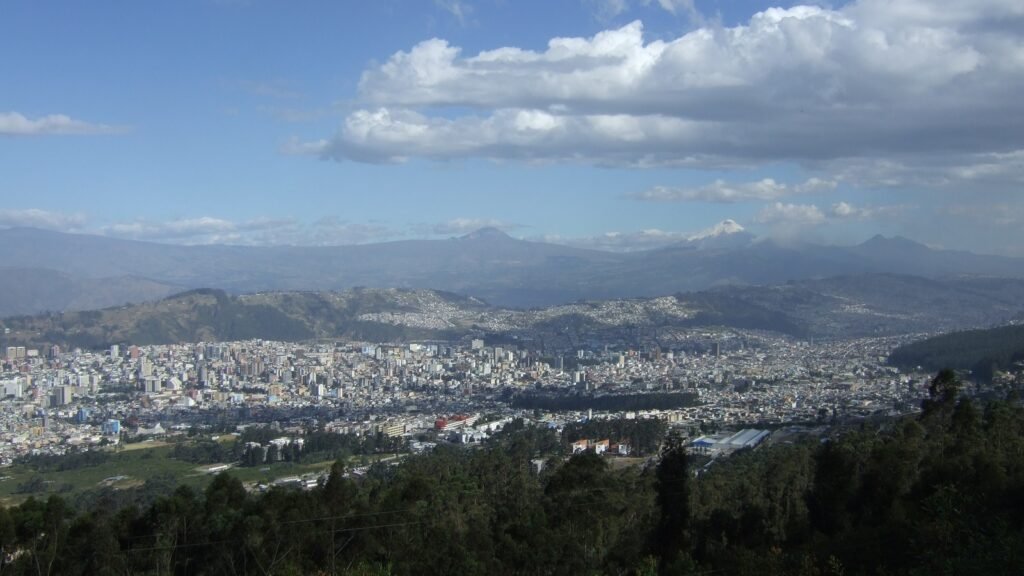
This 10 day Ecuador itinerary is built for first-time visitors who want Andean highlands, two UNESCO-listed colonial cities and a short stay in the Galápagos, while staying out of every area named in the official travel advisories. It uses three bases, Quito, Cuenca and the Galápagos, with four flights and little slack, so it is a fast-paced introduction rather than a relaxed tour.
It is part of our Ecuador travel guide, which explains the official safety advice, seasons, entry rules and natural hazards in more detail. Read the safety section there before you book.
10 Day Ecuador Itinerary at a Glance
- Days 1 to 3: Quito, with the old town and a day trip to Otavalo.
- Days 4 and 5: Cuenca and Cajas National Park.
- Day 6: Fly back to Quito, a travel day before the islands.
- Days 7 to 9: The Galápagos, with a flexible plan.
- Day 10: Fly back to the mainland for your onward flight.
You fly into and out of Quito. In this plan, Day 1 is your first day on the ground, whatever the clock says. Quito sits above 2,800 m, according to Ecuador Travel, so the first day is deliberately easy. The plan is tight: if you can add a night before your international flight home, do. The Galápagos part is the least certain, because of the flooding described below.
Before You Go: Entry Rules and Safety
Canadian advice says Canadians do not need a tourist visa for stays up to 90 days per 12 months and that your passport must be valid for at least six months beyond your departure date. It also says to make sure your passport is stamped on arrival. The FCDO says border officers may ask for proof of a return or onward journey. Other passports have different rules, so see our visa requirements guide.
The Government of Canada, the FCDO and Smartraveller all advise caution in Ecuador and name areas to avoid, as our guide explains. This route avoids all of them, but Quito lies in Pichincha, where a state of exception applies, so expect a visible police and military presence. Read the Canadian advisory before you book, buy insurance that covers altitude and check that it covers your route. The FCDO says insurance can be invalid if you travel against its advice. Our safety and insurance guide explains what to look for.
Book the Key Parts First
Flights and the Galápagos arrangements matter most. Reserve these early:
- Your international flights, plus domestic flights from Quito to Cuenca, back to Quito, and to and from the Galápagos.
- Your Galápagos accommodation and any day tours, with licensed operators only. The Governing Council publishes a list of authorized accommodations.
- The Galápagos Transit Control Card and the park entry fee, which you pay as the official sites describe. Canadian advice says the card is bought at the Governing Council counter in the Quito or Guayaquil airport, and you need identification and a return ticket.
- Airport transfers arranged through your hotel in Quito and Cuenca.
If you connect through Guayaquil, the FCDO says to check with your airline that you stay airside. Read our guides to accommodation and flights and transportation for general booking tips.
Day 1: Arrival in Quito
Arrive at Quito’s international airport. The FCDO says there are authorized taxi booths at Quito and Guayaquil airports, so use them or a transfer arranged by your hotel, and Canadian advice says to use official taxis with orange plates only. Ecuador Travel advises drinking plenty of fluids and resting on your first day. Keep the day light: a short walk in daylight, an early dinner and an early night.
Day 2: Quito’s Old Town
Quito’s historic center was inscribed by UNESCO in 1978. Ecuador Travel describes baroque architecture, squares and churches covered in gold leaf, and suggests exploring the old town with local guides. Its Andes guide lists the heritage churches, museums, the El Panecillo viewpoint and the TeleferiQo cable car. The FCDO says to take care in Quito’s old town and at transport hubs because of mugging and pickpocketing, so go in daylight, carry only what you need and keep your phone out of sight.
Day 3: Otavalo and the Northern Highlands
Ecuador Travel describes the Plaza de los Ponchos in Otavalo as a large Indigenous textile market, with nearby Lake San Pablo and the Peguche waterfall. Use a licensed tour operator or a transfer arranged by your hotel, because Canadian advice says to avoid intercity buses. Otavalo, in Imbabura province, is not among the areas named in the advisories we read, but conditions can change.
If you prefer volcano scenery and the park is open, Ecuador Travel lists Cotopaxi refuge treks, and says to bring thermal clothing because the refuge is above 4,800 m. Canadian advice says access to Cotopaxi National Park can be restricted at any time without notice, so keep this as a backup.
Day 4: Fly to Cuenca
Fly from Quito to Cuenca, which Ecuador Travel describes as a valley city crossed by four rivers, with a UNESCO-listed historic center. Spend the afternoon on foot in daylight: the New Cathedral and the Tomebamba riverbank are on Ecuador Travel’s list. Cuenca is at altitude too, so keep the pace gentle.
Day 5: Cajas National Park
Ecuador Travel says Cajas National Park has changeable weather, so bring a rain jacket and warm layers even on sunny days. It lists hiking and birdwatching. Use a licensed guide or tour. In the late afternoon, visit a Panama hat workshop: Ecuador Travel says Cuenca is known for toquilla straw hats, and our culture guide explains their heritage.
Day 6: Back to Quito
Fly from Cuenca to Quito and stay near the airport or in the city, so that you can reach the Galápagos counters on time the next day. Use this day to buy supplies, confirm your tours and reconfirm your flights. In our view, a buffer night here is cheap insurance, because weather and security checks can cause delays.
Day 7: Fly to the Galápagos
Fly from Quito to the islands. At the Governing Council counter, buy the Transit Control Card and show identification and your return ticket, as Canadian advice describes. Ecuador Travel lists Santa Cruz as a base for reaching other islands and San Cristóbal as having an airport.
Check the flooding first. The FCDO says the Galápagos government declared an emergency on 31 October after flooding on Santa Cruz, and reports road closures, power outages and disruption to travel to Baltra airport. The Canadian page, updated on 9 November, no longer lists a flooding notice, so check both advisories and confirm with your airline or tour operator before you go. If the Galápagos are not workable, spend Days 7 to 9 on a second base in the highlands, such as the cloud-forest town of Mindo that Ecuador Travel describes, or extra days in Cuenca.
Day 8: Santa Cruz
Ecuador Travel lists the Charles Darwin Station, a walk to Tortuga Bay and snorkeling at Las Grietas on Santa Cruz. Keep your plan flexible, follow local closures and book snorkeling with a licensed operator. Use reef-safe sunscreen, as Ecuador Travel advises, and keep your distance from wildlife.
Day 9: A Second Island or a Day Tour
Ecuador Travel recommends at least two days on Isabela, which a ten-day trip cannot fit, so a short stay on San Cristóbal or a licensed day tour from Santa Cruz is more realistic. The FCDO says some small boats that carry passengers between islands do not follow safety rules, so use reputable operators and ask about life vests and lifeboats before you book, even for short trips.
Day 10: Return and Departure
Fly back to Quito or Guayaquil and connect to your international flight. If you connect through Guayaquil, stay airside, as the FCDO advises. Leave a generous buffer before your international departure; if your flight home leaves the same day, check that the island flight times allow it, or add a night in Quito.
Ecuador Travel Tips
Altitude. Quito and Cuenca are high, so rest on the first day, drink fluids and ease in, as Ecuador Travel advises. The FCDO says altitude sickness is a risk in parts of Ecuador.
Money. Canadian advice says the currency is the US dollar. Carry small bills for taxis and markets, use ATMs inside banks or shopping centers and avoid withdrawing money after dark, as the FCDO advises.
Getting around. Use official taxis or hotel-arranged transfers and do not hail taxis on the street. Canadian advice says to avoid local and intercity buses and travel after dark.
Health. The CDC says there is no malaria transmission in Quito or the Galápagos and that yellow fever vaccination is not recommended there. Drink boiled, filtered or bottled water, as the FCDO says. Our packing guide and travel budgeting guide help with preparation.
Where to Stay on This Itinerary
Choose accommodation with good security measures, which Canadian advice recommends, and ask your hotel to arrange taxis. In Quito, staying close to where you will spend your time reduces the number of trips you need to take at night. In Cuenca, the historic center puts the main sights within walking distance in daylight. In the Galápagos, Ecuador Travel lists Santa Cruz as a base, and the Governing Council’s list of authorized accommodations helps you choose a legitimate property.
Best Time for This 10 Day Ecuador Itinerary
Ecuador Travel gives June to September as the dry season for the Andes, with clear skies that suit volcano visits. For the Galápagos it says June to November brings cooler water and more marine life, and December to May brings warm water that suits snorkeling. Canadian advice says the rainy season runs from December to May, with floods and landslides that can close roads, and that El Niño may bring heavy rainfall, flooding and landslides, typically from October to May. In our view, the overlap of June to September suits this route best, subject to current conditions in the islands.
Is 10 Days Enough for Ecuador?
Ten days is enough for an introduction to the highlands and a short island stay, but it leaves little room for delays, weather or altitude. Choose fewer bases rather than more: a week suits Quito and Cuenca on their own, and two weeks lets you add the Amazon with an authorized operator or more time in the Galápagos. We do not recommend adding the mainland coast, for the reasons in our Ecuador coastlines guide.
Final Thoughts on This 10 Day Ecuador Itinerary
This route is a careful first introduction, built around the parts of Ecuador that the governments single out as lower risk. It is not risk-free, and the Galápagos leg may need to change. Check each government’s current advice, confirm your insurance, use official transport and keep a backup plan for every flight.
Use this 10 day Ecuador itinerary as a starting point, then adjust it to your time and comfort level. For more help, see how to plan a better trip, and read our Ecuador travel guide, what to eat in Ecuador and Ecuador culture and local customs.