
This guide to Ecuador coastlines covers the Galápagos Islands and the mainland Pacific coast, with the official safety advice first, because the two are treated very differently by the governments that publish travel advice.
Ecuador Travel, the official tourism site, describes a Pacific coast of warm waters, beaches and seafood cooking, and the Galápagos as islands of wildlife found nowhere else on Earth. The governments are more cautious. The Government of Canada says to take normal security precautions in the Galápagos, but names areas of the mainland coast to avoid, and the UK Foreign, Commonwealth and Development Office (FCDO) advises against all but essential travel to the whole Coastal Region. That is why this guide spends most of its time in the islands.
Ecuador Coastlines: Where to Start (and What the Governments Say)
Start with the advice, because it decides which part of the coast is realistic for most visitors. The Canadian page (updated 9 November 2026) says to take normal security precautions in the Galápagos and advises against non-essential travel to Esmeraldas province, Machala and Huaquillas in El Oro, parts of Guayas including Durán, Milagro, Naranjal, Yaguachi and named districts of Guayaquil, Manta and Portoviejo in Manabí, and La Libertad and Santa Elena in Santa Elena province. The FCDO (updated 1 November) advises against all but essential travel to the Coastal Region provinces of Esmeraldas, Manabí, Santa Elena, Guayas, El Oro, Los Ríos and Santo Domingo de los Tsáchilas.
Smartraveller says to reconsider your need to travel to Esmeraldas and Guayaquil city and to take normal precautions in the Galápagos.
Our Ecuador travel guide has the full advisory summary. Check the current advice from your own government before you book.
Galápagos Beaches: What to Expect
Ecuador Travel says the Galápagos National Park covers 13 main volcanic islands about 1,000 km from the mainland, that 97 percent of the area is protected and that it was the first site declared a UNESCO Natural World Heritage Site, in 1978. It names giant tortoises, marine iguanas and sea lions among the wildlife.
Santa Cruz. Ecuador Travel lists the Charles Darwin Station, a walk to Tortuga Bay, snorkeling at Las Grietas and the highlands, and calls it an ideal base for reaching other islands. See the flooding note below before you plan around it.
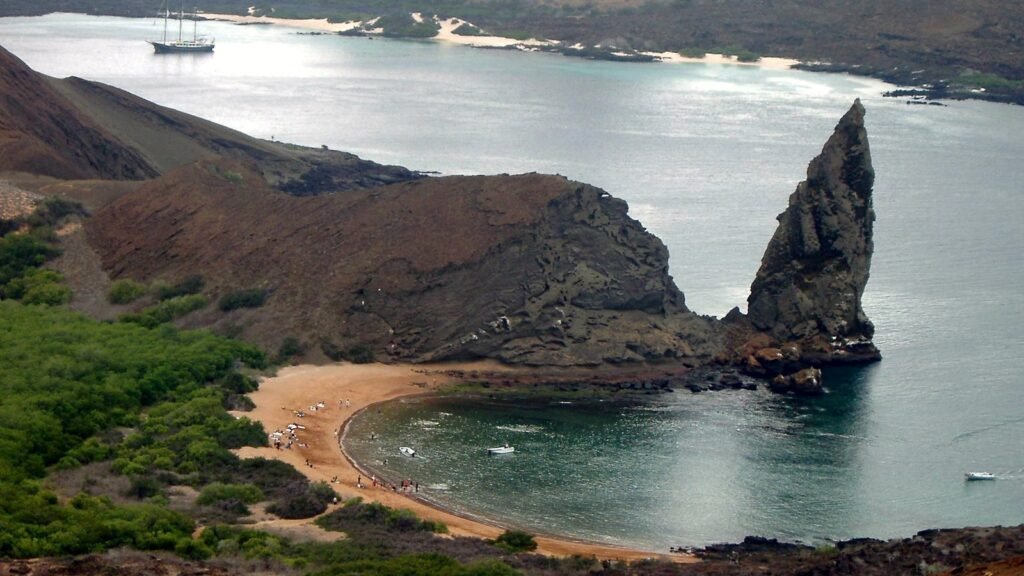
San Cristóbal. Ecuador Travel says the island has an airport and sea lions near the town, and lists the Pinnacle Rock viewpoint.
Isabela. Ecuador Travel lists a trek to the Sierra Negra volcano and snorkeling at Los Túneles, Concha de Perla and the Wall of Tears, and recommends at least two days. Canadian advice names Sierra Negra and Fernandina among the active volcanoes that authorities monitor.
Galápagos National Park Rules
Ecuador Travel says access to the islands is limited for conservation and tells travelers to book licensed tour operators and cruises, use reef-safe sunscreen and fully respect National Park rules. We could not read the park directorate’s visitor rules in full for this guide, so read them on the Galápagos National Park Directorate site before you go. In our view, the safest assumption is that you should stay on marked paths, keep your distance from wildlife and follow your licensed guide at all times.
Entry to the Galápagos
Canadian advice says that to enter the Galápagos you need identification, the Galápagos Transit Control Card (TCT) bought at the Governing Council counter in the Quito or Guayaquil airport, and a return ticket. It says the maximum stay for tourists is 60 days in a one-year period. Smartraveller says foreign tourists must fill out the Transit Control Card at least 24 hours before entering and have an outbound flight and travel insurance, and may be asked to show a hotel booking. The Galápagos Governing Council publishes the entry information and lists an online TCT service.
The park directorate has a separate link for the Galápagos entry fee. Fees change, so this guide does not quote them: read the current schedule on the official site and budget for it. Our travel budgeting guide explains how to plan for fees and taxes.
Seasons and Water in the Galápagos
Ecuador Travel says the islands can be visited year-round. It says June to November brings cooler water and more marine life, and December to May brings warm water, which it calls ideal for snorkeling.
Heavy rain has affected the islands this season. The FCDO says flooding on Santa Cruz led the Galápagos government to declare an emergency on 31 October, with road closures, power outages and disruption to travel to Baltra airport reported, and says to follow local authorities and confirm arrangements with airlines or tour operators. The Canadian page, updated on 9 November, no longer lists a flooding notice for Santa Cruz. Conditions change, so check both advisories before you book.
Canadian advice also describes El Niño 2026-2027. It says El Niño may bring periods of heavy rainfall, flooding, landslides and transport disruption, typically during the rainy season from October to May, and that Ecuador’s risk management agency has identified areas of concern in the Coastal region, the Andes, the Amazon and the Galápagos. It says to follow regional weather forecasts and to make sure your insurance covers disrupted travel plans.
Snorkeling and Swimming Safety
Use reef-safe sunscreen, as Ecuador Travel advises, and snorkel only with licensed operators. The FCDO says some small boats that move people between islands do not follow safety rules, such as holding the right licence, respecting maximum passenger numbers, checking the motor and fuel or carrying enough life vests. It says to use reputable boat operators, ask about safety features before you book, even for short trips, and check that life vests and lifeboats are provided.
Canadian advice says coastal waters can be dangerous, that riptides are common, that most beaches do not have lifeguards or warning flags and that rescue services may not meet international standards. It says this applies to the mainland and to the Galápagos. It says to do scuba diving and other water activities only with a well-established company, not to swim alone, after hours or outside marked areas, and to ask residents and tour operators about hazards and safe swimming areas. It also says to monitor weather warnings and follow the instructions of local authorities.
The CDC says to avoid swallowing water when swimming and to avoid swimming or wading in fresh unchlorinated water. For tsunami awareness, the Governing Council publishes a page on tsunami evacuation routes and safe zones, and Canadian advice says a tsunami can follow a nearby earthquake within minutes.
Medical Care in the Galápagos
Canadian advice says that in the Galápagos you will likely need medical evacuation for a serious condition, that the wait can be up to 48 hours because no air ambulance service is based on the islands and that evacuations can be extremely expensive. It says to buy travel insurance that covers medical evacuation and hospital stays. Our travel insurance and safety guide explains what to look for.
The Mainland Pacific Coast: Official Advice
Ecuador Travel describes Guayaquil as the main gateway, the Spondylus Route as a scenic road trip linking beaches, cliffs and fishing villages, Puerto López and Machalilla National Park for whales, Montañita for surfing, Salinas as the best-known beach resort and Esmeraldas for Afro-Ecuadorian culture and beaches. It lists June to September as whale-watching season and December to May as the season of full sun and warm seas.
These places lie in Guayas, Manabí, Santa Elena and Esmeraldas, all of which the FCDO names. Canada names Esmeraldas province and parts of the other three, including Manta, Portoviejo, La Libertad and Santa Elena, and Australia singles out Esmeraldas and Guayaquil. This guide does not recommend a mainland coast itinerary, and we name these places only so you can see where the advice applies. Canadian advice says tourists are not usually targeted but can be caught in the crossfire, and that explosives have been used, especially in coastal provinces. If you decide to travel against government advice, check your insurance first, because the FCDO says travel insurance could be invalid.
Getting to the Coast and the Islands
Galápagos flights leave from Quito or Guayaquil. The FCDO says airside transit at Guayaquil airport is the one exception to its advice against travel to Guayas, so check with your airline before booking that you will stay airside. It says there are authorized taxi booths at both airports.
Sea travel carries its own risks: Canadian advice and the FCDO both say piracy and armed robbery against ships occur in and around Ecuador’s waters, so sailors and yacht travelers should read the advice. For most visitors, flights to the islands and licensed operators are the practical choice.
Choosing Your Ecuador Coast
If your priority is beaches and sea, the Galápagos are the part of Ecuador where the governments’ advice is mildest, but the islands are not a beach holiday in the usual sense: access is regulated, visits are with licensed operators and the Santa Cruz flooding may affect plans. If your priority is a relaxed coastal trip with fewer official warnings, other countries may suit you better. See our guides to Peru’s coastlines, Brazil’s coastlines and Chile’s coastlines.
Experience Ecuador Beyond the Coast
Ecuador’s highlands and cities are where most first trips start, and they sit outside the areas the governments single out. Read our Ecuador travel guide, what to eat in Ecuador, Ecuador culture and local customs and 10 day Ecuador itinerary to plan a careful trip.