
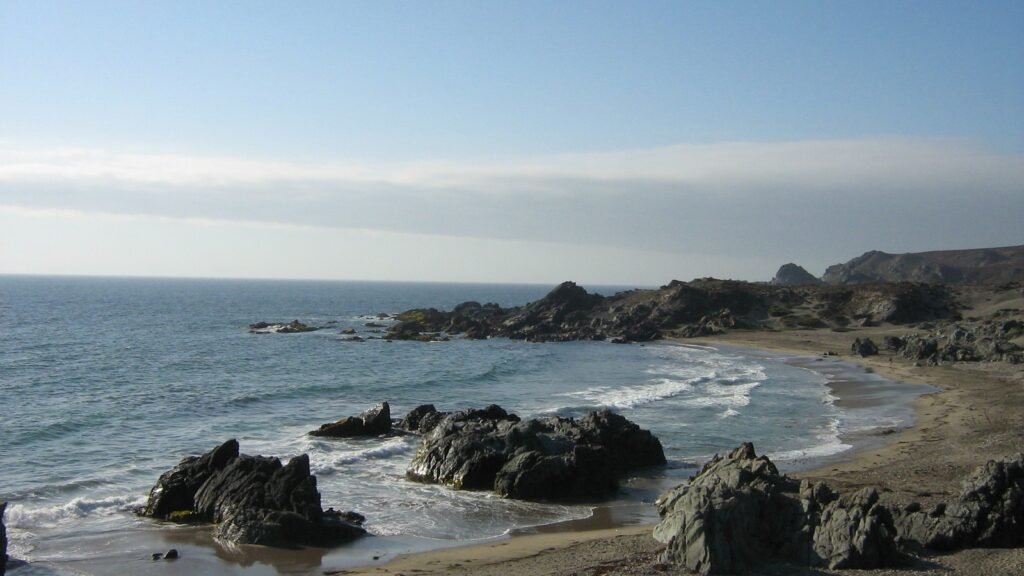
Chile coastlines stretch from the far northern desert to the channels and fjords of Patagonia, and they have more to offer than beach days. You will find surf towns, a UNESCO-listed port city, penguin colonies, island culture and a Pacific that is powerful, cold in many places and deserving of respect.
Chile Travel says the country has about 900 beaches. This guide is not a ranking of them. It helps you choose the right stretch of coast for your dates and explains the safety points that matter most. It is one part of our Chile travel guide.
Chile Coastlines: Where to Start
For a first trip, the easiest coast to combine with Santiago is the central one, with Valparaíso and Viña del Mar just over an hour away. If you are flying north to the Atacama Desert, the northern and Atacama coasts are within reach. Surfers will want Pichilemu, and wildlife lovers will look south to Patagonia.
Seasons matter. Chile Travel’s climate guide describes warm, dry summers from December to March in central Chile, a rainy south and an arid, sunny north, so the best coast depends on your dates. Our section on weather below explains how to choose.
The Far North: Arica and Iquique
In the north, desert meets the Pacific. Chile Travel describes Iquique as a beach city with warm water, a seafront walkway and nightlife, and says its name comes from the Aymara words “Iki Iki,” meaning “place of dreams.” Flights serve Iquique from across Chile. Chile Travel’s cuisine guide highlights corvina ceviche in Arica and Iquique, so the northern coast is also a good place for seafood.
Canadian advice lists Iquique among the cities where visitors should be especially alert for petty theft, so keep your phone and valuables out of sight on the seafront.
Bahía Inglesa and the Atacama Coast
Bahía Inglesa is one of Chile’s best-known family beaches, with white sand and calm, turquoise water, according to Chile Travel. It is in the Atacama Region, about 800 kilometres north of Santiago and about 70 kilometres from Copiapó. Chile Travel suggests flying from Santiago to Copiapó and then driving about half an hour. Playa La Virgen is described as one of the best beaches in the country.
Chile Travel’s Atacama coastline route combines the beaches of Bahía Inglesa with Pan de Azúcar National Park and the Los Dedos Paleontological Park over three days. It is a good option if you already plan to be in the north.
Valparaíso, Viña del Mar and the Central Coast
This is the coast most first-time visitors reach. Chile Travel describes Valparaíso and Viña del Mar as sister cities just over an hour from Santiago. Valparaíso is built across many hills, with more than 15 funiculars, colorful murals and parts of its historic quarter on the UNESCO World Heritage list. Boat rides around the bay leave from Muelle Prat.
Viña del Mar is the Garden City, with parks, beaches and a waterfront promenade that runs from the Flower Clock past Caleta Abarca and Miramar. Wulff Castle, built in 1906, sits on the rocks above the water and is especially pretty at sunset.
Canadian advice says to avoid walking after dark around Cerro Alegre and other hills in Valparaíso, and that thieves target rental cars in Valparaíso and Santiago. Visit the hills in daylight and leave nothing visible in a parked car.
Pichilemu and the Surf Coast
Pichilemu is known as the world surfing capital, and Chile Travel says Punta de Lobos is considered the birthplace of surfing in Chile and a World Surf Reserve. The waves are cold-water point breaks, with Infiernillo another well-known beach, and the town also offers windsurfing, kitesurfing and surf lessons for all levels.
Chile Travel’s Pichilemu profile places the town about 212 kilometres south of Santiago, and another Chile Travel page gives about three hours by public transport or by car along Route 78. Beginners should take lessons with a local school and respect the size of the swell.
Chiloé and the Southern Coast
Chiloé is Chile’s island archipelago, a green, rainy place of fishing communities, channels and wooden churches. Chile Travel’s guide to the Chiloé churches route says 16 of the churches are UNESCO World Heritage sites, built from native woods without metal nails, and suggests three to four days to explore them, with road travel and ferry crossings between islands.
Chiloé is also known for its stilt houses over the water and for curanto, a meal cooked in the earth on hot stones. Chile Travel’s southern cuisine guide describes it as a place where gastronomy is a culture in itself. Expect changeable weather and plan for rain.
Patagonian Waters and the Strait of Magellan
In the far south the coast breaks into channels, islands and fjords. Chile Travel’s guide to the Los Pingüinos Natural Monument describes Isla Magdalena in the Strait of Magellan as home to one of the largest colonies of Magellanic penguins in the world. Visitors take a boat tour from the port of Punta Arenas and walk marked trails, and the page gives the season as spring to summer.
Book through a licensed operator, follow the guides’ instructions to keep your distance from the birds and expect cold, windy conditions on the water. Punta Arenas is also the usual gateway to Torres del Paine, so a penguin trip fits naturally into a Patagonian route.
Rapa Nui’s Beaches
Chile Travel lists Anakena, Hanga Roa and Orongo among the attractions of Rapa Nui, which it describes as an island of beaches, volcanoes and hidden attractions. The island’s moai and ceremonial platforms are protected, and the official park rules ask visitors to view them from a permitted distance without touching them, to stay on marked trails and to follow the guide requirement for park sites. Read our culture and local customs guide before you go.
Easter Island has its own entry rules. Canadian advice says stays are limited to 30 consecutive days, and you must show a round-trip ticket, a valid passport and authorized accommodation, and complete the Rapa Nui Entry Form.
Weather and the Best Coast for Your Travel Dates
Chile coastlines change a lot with the season, so use the climate zones as a guide. Central Chile has warm, dry summers from December to March, so Valparaíso, Viña del Mar and Pichilemu suit those months, although Canadian advice says wildfires are common from December to March between the Valparaíso and Araucanía regions and smoke can affect air quality. The north is arid and sunny. The south has a high chance of rain all year, so pack a waterproof jacket for Chiloé and Patagonia whatever the month.
Winter brings more risk. Canadian advice says flooding is frequent in the fall and winter, especially from May to August, and that heavy rain can cause landslides. It also says El Niño conditions are expected to strengthen into 2027, which may raise the risk of storms and floods. Check forecasts from Meteorología Chile and the Chilean Navy before any coastal trip.
Swimming and Beach Safety
Canadian advice says dangerous waves from large ocean swells occur along the Chilean coast, that large waves carrying rocks and debris can arrive without warning even when the weather is clear, and that you should not enter the ocean or do water activities when swell warnings are in force. Exercise caution on rocky areas and monitor local swell reports.
Chile Travel describes the water at Pichilemu as cold, and in our view you should expect cold Pacific water along much of the central and southern coast. Swim at beaches that other people are using, never swim alone, and ask a lifeguard, a hotel or a local before entering the water. For a beach, rock or sea emergency, Chile Travel says to call 137 to reach the Maritime Authority.
Tsunami Awareness
Chile sits in a very active seismic zone. Canadian advice says a tsunami can occur within minutes of a nearby earthquake and that the risk can remain for several hours after the first tremor. If you stay on the coast, learn the evacuation plan for the area when you arrive.
Chile Travel points visitors to Visor Chile Preparado for risk maps and evacuation routes, and says to follow SENAPRED alerts, sirens and emergency alerts sent to your phone. In our view, if an earthquake is strong or long, moving to high ground right away is the safest response, and the evacuation maps show where to go.
Getting to the Coast
Distances along Chile coastlines vary widely. Valparaíso and Viña del Mar are just over an hour from Santiago by road, and Pichilemu is about three hours south. Bahía Inglesa is reached by flying to Copiapó, and Iquique has its own airport. Punta Arenas has year-round flights from Santiago, with a flight time of about 3 hours 27 minutes according to Chile Travel.
If you rent a car, read our Chile travel guide for Canadian advice on licences, insurance and theft from rental cars. Use official airport transport and book boat trips through licensed operators.
Choosing the Right Chilean Coast
- First trip with Santiago: Valparaíso and Viña del Mar.
- Surfing: Pichilemu and Punta de Lobos.
- Family beach days in the north: Bahía Inglesa.
- Culture and churches: Chiloé.
- Wildlife: Los Pingüinos Natural Monument from Punta Arenas.
- Heritage and archaeology: Rapa Nui.
For a route that links the coast to the desert and Patagonia, see our 10 day Chile itinerary.
Experience Chile Beyond the Coast
Chile coastlines reward travelers who plan around the season, respect the ocean and keep a flexible schedule. Pair a coastal stop with the desert, the wine valleys or Patagonia, and read our guides to what to eat in Chile and Chile culture and local customs.
If you are comparing coasts across South America, see our guides to Argentina’s coastlines, Peru’s coastlines and Brazil’s coastlines.