
If you are wondering what to eat in Croatia, start with geography. The coast cooks like the Mediterranean, with olive oil, grilled fish, garlic and wine. The interior cooks like Central Europe, with roasts, stews, dumplings and pastries. Istria, in the north, adds truffles and handmade pasta.
The Croatian National Tourist Board invites visitors to explore the diversity of Croatian cuisine, and names specialties from Maraschino liqueur from Zadar and cheese from Pag to oysters and mussels from Ston, turkey with mlinci and pašticada from Split. We use that official list as a guide. Other dish descriptions below are general descriptions of well-known Croatian food, and recipes vary from town to town.
What to Eat in Croatia: Start with the Basics
A typical coastal meal is simple: fresh fish or seafood, olive oil, a side of chard and potatoes, bread and local wine. Inland meals are heartier, with meat, cabbage, beans and dough-based sides. Portions are generous, and meals are unhurried.
Two words help with menus. A konoba is a traditional tavern, usually family-run, serving local dishes. Marenda is a late-morning or midday meal of the day on the Dalmatian coast, often good value. In our view, eating at a konoba away from the main square is the easiest way to eat well.
Dalmatian Coast Dishes
Pašticada. The tourist board names pašticada from Split among Croatia’s specialties. It is beef marinated and slow-cooked in a sauce with wine and dried fruit, usually served with gnocchi.
Peka. Meat or octopus with potatoes and vegetables, cooked slowly under a metal dome covered with embers. It takes hours, so many restaurants ask you to order it in advance.
Black risotto. Crni rižot is a risotto colored and flavored with cuttlefish ink. It appears on almost every coastal menu.
Grilled fish and gregada. The tourist board lists delicious grilled fish and salted anchovies. Fish is often sold by weight, so ask the price before ordering. Gregada is a fish stew with potatoes associated with the island of Hvar.
Ston oysters and mussels. The tourist board highlights oysters and mussels from Ston, a small town north of Dubrovnik that is easy to visit on a day trip.
Istria: Truffles, Olive Oil and Pasta
Istria has its own food identity. Truffles from the forests of central Istria are shaved over pasta, eggs and steak, especially in autumn. Fuži and pljukanci are local handmade pasta shapes, often served with truffle or game sauces.
Istrian olive oil and prosciutto are served as starters, and maneštra is a thick vegetable and bean soup. If your route includes Rovinj, Pula or the hill towns, plan at least one unhurried lunch inland.
Zagreb and the Inland Kitchen
Štrukli. A Zagreb and Zagorje specialty: thin dough filled with fresh cheese, boiled or baked. It can be savory or sweet.
Turkey with mlinci. Named by the tourist board, this is roast turkey served with mlinci, a thin flatbread softened in the roasting juices.
Kulen and Slavonian dishes. The tourist board lists ham and kulenova seka from Slavonia. Kulen is a spiced, cured pork sausage from the eastern plains, where paprika-rich stews are also common.
Neretva Valley. The tourist board mentions eels and frogs from the Neretva Valley, a river delta between Split and Dubrovnik known for its own stew.
Cheese, Prosciutto and Starters
The tourist board names cheese from the island of Pag, a hard sheep’s cheese with a salty, sharp flavor. It is often served with pršut, dry-cured ham from Dalmatia or Istria, as a shared starter.
Salted anchovies, marinated fish and octopus salad are common first courses on the coast. In our view, a plate of Pag cheese, pršut and olives with a glass of local wine is the best introduction to the cuisine.
Markets Worth Visiting
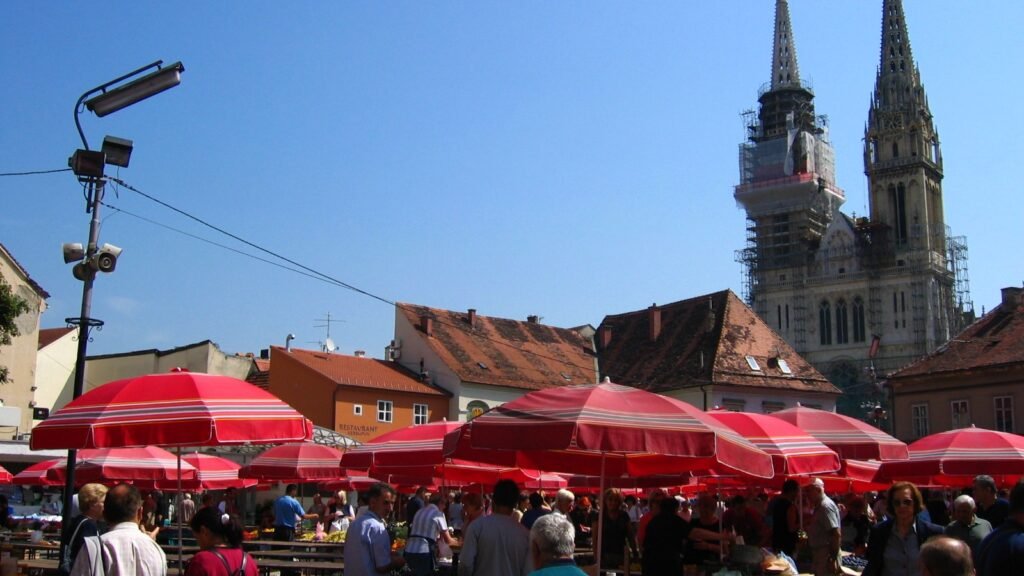
Open-air markets are part of daily life. Zagreb’s Dolac market, just above the main square, sells fruit, vegetables, cheese and flowers under red umbrellas. Split has the Pazar market beside the old town and a fish market a few streets away, and most coastal towns have a small morning market near the harbor.
Go in the morning, since most markets wind down by early afternoon. Canadian advice says pickpockets are particularly active at tourist sites and in crowded places, so keep your bag in front of you and carry small notes and coins.
Wine, Rakija and Coffee
Croatia makes wine in every region. Malvazija is the best-known white of Istria, Plavac Mali is the main red of Dalmatia, and Graševina is common inland. Many restaurants serve house wine by the carafe.
Rakija is a fruit brandy offered as a welcome drink or after a meal, and the tourist board names Maraschino, a cherry liqueur from Zadar, as a world-famous aperitif. Coffee is a ritual: people sit over a single cup for a long time, and nobody will rush you. The FCDO notes that drinking alcohol in public spaces can bring an on-the-spot fine in some town centers, so drink at a table.
Desserts and Sweets
The tourist board lists kroštule and fritule among Croatian desserts. Fritule are small fried dough balls, common at fairs and at Christmas, and kroštule are crisp fried pastry ribbons. It also lists Kotonjata, a firm quince sweet.
Other sweets to look for include rožata, a caramel custard from Dubrovnik, and kremšnita, a custard slice associated with Samobor near Zagreb. Ice cream shops are on every waterfront in summer.
Eating Safely and Tipping
Tap water is generally drunk by locals and visitors, though we did not find an official statement on it, so ask your accommodation if you are unsure. Canadian advice says never to leave food or drinks unattended and to be wary of accepting snacks or drinks from new acquaintances.
We did not find an official source on tipping. In our view, the usual practice is to round up in cafes and leave around 10 percent in restaurants for good service, after checking the bill. Check prices for fish sold by weight, and ask about any cover charge for bread before you order. Our food and dining guide has more general advice.
A Sample Day of Eating
A typical day might start with coffee and a pastry or burek from a bakery. Marenda or a light lunch at a konoba follows, perhaps black risotto or grilled sardines. The afternoon is for coffee or ice cream.
Dinner is the main meal for visitors: a shared starter of cheese and pršut, grilled fish with chard and potatoes or pašticada with gnocchi, and a dessert such as rožata. In our view, planning one traditional meal a day and keeping the rest simple is the easiest way to enjoy the food without overspending.
Regional Cheat Sheet
It helps to match dishes to your route. In Zagreb and the north, look for štrukli, turkey with mlinci, roasts and custard slices. In Istria, order truffle pasta, maneštra, olive oil and Malvazija wine. In Split and central Dalmatia, try pašticada, black risotto, grilled fish and peka. On the islands, Hvar is linked with gregada and Pag with its sheep’s cheese. Around Dubrovnik, look for Ston oysters and rožata.
Slavonia, in the east, is the home of kulen and paprika stews, and is far from the usual tourist route. The FCDO lists Eastern Slavonia among the areas where unexploded mines remain outside tourist resorts, so travelers who go there for food and wine should stay on roads and marked paths.
How to Order and What to Expect
Menus on the coast often list fish by the kilogram, with the daily catch shown on ice or brought to the table. Ask the waiter to weigh the fish and tell you the price before it is cooked. Side dishes are usually ordered separately, and blitva, chard with potatoes and garlic, is the classic partner for fish.
Bread may be brought automatically and charged as a small cover, and tap water is not always offered, so ask for it if you want it. Lunch is typically eaten between noon and mid-afternoon and dinner from about seven, later in summer. Peka and whole fish for a group are best ordered a day ahead, which your accommodation can arrange by phone.
Vegetarian and Allergy Notes
Traditional menus lean on meat and fish, but vegetarians can eat well with some planning. Look for cheese štrukli, maneštra without meat, truffle pasta, grilled vegetables, chard with potatoes, salads and pizza, which is widely available on the coast.
Travelers with allergies should note that seafood stock, cured meat and nuts appear in dishes where you might not expect them. In our view, it is worth carrying a short written note in Croatian that explains your allergy, and asking staff to confirm ingredients before you order.
Experience Croatia Through Its Food
The best answer to what to eat in Croatia depends on where you are standing. Eat seafood and pašticada in Dalmatia, truffles and pasta in Istria, and štrukli and roasts in Zagreb. Ask what is local, order the house wine, and take your time.
For more planning, read our Croatia travel guide, our 10 day Croatia itinerary and our guide to Croatia culture and local customs.