
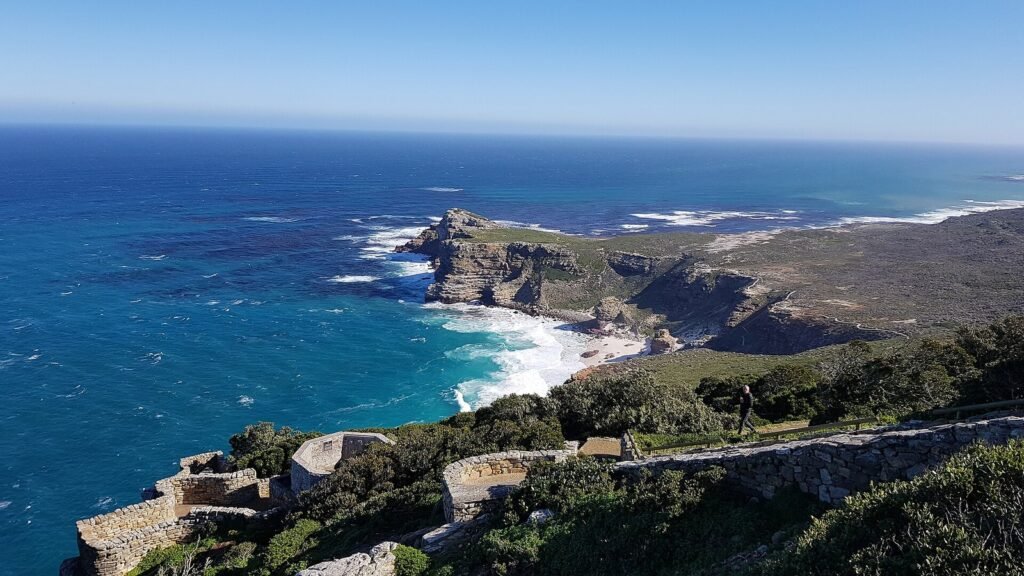
South Africa has two oceans and one very long coast. The Atlantic side is cold and dramatic, with mountains meeting the sea around Cape Town, while the Indian Ocean side is warmer, with long beaches, lagoons and wetlands. South Africa coastlines suit travelers who want scenery, wildlife and active days, but they also need more sea-safety care than most beach destinations, so this guide covers both the places and the official advice, using sources where we found them.
UNESCO lists several coastal and marine landscapes among South Africa’s World Heritage properties, including the Cape Floral Region Protected Areas and the iSimangaliso Wetland Park. Beach descriptions below are general, and conditions change with the season. Our South Africa travel guide has the full safety summary.
South Africa Coastlines: Where to Start
For a first trip, most travelers pair Cape Town with the Garden Route, which links lagoons, forests and beaches east of the city. KwaZulu-Natal and the Indian Ocean coast suit a warm-water beach stay. In our view, the safest and easiest way to enjoy the coast is to stay in established tourist towns, swim at supervised beaches and avoid isolated stretches. Our 10 day South Africa itinerary includes the Cape Peninsula and the Garden Route.
The Cape Peninsula and the Atlantic Coast
Cape Town and the Atlantic Seaboard. The city sits between Table Mountain and the sea, and several beaches lie within a short drive of the center. The Atlantic is cold, and in our view the beaches are better for walks, sunsets and photos than for long swims.
The southern Peninsula. The Peninsula drive to Cape Point and the False Bay coast takes in beaches, fishing villages and marine wildlife. The FCDO warns that seals and other marine animals can bite and that rabies has been detected in seals along the Cape Peninsula coastline, so keep your distance and seek immediate medical attention if you are bitten.
Shark safety. Around Cape Town, Canada says there is a flag system alerting beachgoers to shark activity. The organisation behind it, Shark Spotters, says the flags show spotting conditions and shark alerts, and that a beach with no flag has no spotter on duty. Learn the flags when you arrive and ask the spotter about recent activity.
The Garden Route
The Garden Route runs along the south coast east of Cape Town. Towns such as Mossel Bay, Knysna and Plettenberg Bay, and the Tsitsikamma area, are known for lagoons, forests, cliffs and beaches. In our view, it is best explored over two or three nights.
Canada advises not to drive after dark, and the FCDO suggests asking lodges about road conditions in remote areas. If you plan to snorkel, dive or take a boat trip, use a reputable company, make sure life jackets are available for every passenger, and do not board a boat that looks unseaworthy, as Canada advises.
The Eastern Cape and the Wild Coast
East of the Garden Route, the coast is wilder, with fewer facilities. Canada says many parks and reserves are in remote areas with limited emergency services. In our view, this region suits experienced travelers with local guidance and is not an easy first-trip choice. Travelers heading to Addo Elephant National Park from Gqeberha should use the N2 via Colchester, not the R335, as Canada and the FCDO advise.
KwaZulu-Natal and the Indian Ocean Coast
Durban and the KwaZulu-Natal coast have warm water, long beaches and a large community with South Asian roots. UNESCO describes the iSimangaliso Wetland Park, a transboundary property with Mozambique’s Maputo National Park, as including coral reefs, sandy beaches, coastal dunes, freshwater lakes, mangroves and savannahs, and as supporting nesting sea turtles, dolphins, migrating whales and whale sharks.
Canada says heavy rain is typical in KwaZulu-Natal from October to April, and that flash floods can occur outside this period. Check forecasts and local advice before beach days, and stay out of rivers and lakes, since Smartraveller advises not to swim in them because of wildlife and disease.
What the Beaches Are Really Like
The Atlantic coast is cold and often windy, and the Indian Ocean is warmer. Both can have strong currents, and in our view, South Africa coastlines look calm from the sand and still be dangerous in the water. The FCDO says many people drown every year in strong currents and that beach conditions and safety measures vary. Not all beaches are supervised, Canada says, and shark attacks can occur.
Crime is the other consideration. The FCDO advises avoiding isolated beaches and picnic spots and not walking alone on deserted beaches, especially in the dark, and Canada says to avoid isolated picnic areas and beaches. Keep valuables to a minimum and stay close to other people.
Swimming Safety and Beach Etiquette
The FCDO and Canada give practical advice for the water:
- Swim only on supervised beaches, between the red and yellow flags, and follow lifeguard instructions.
- Read warning signs, and ask local people about conditions where there are no signs.
- If in doubt, do not enter the water.
- Ask for a life jacket for water sports and boat trips.
- Check the National Sea Rescue Institute (NSRI) for information on rip currents. The FCDO gives +27 87 094 9774 as the NSRI emergency line and 112 for emergency services from a mobile.
- Take care near seals and other marine animals.
Follow local rules about fires, litter and protected areas, and do not take shells or marine life. Many coastal areas are in protected reserves.
Seasons and Sea Conditions
South Africa’s seasons are reversed from the Northern Hemisphere, so summer runs from about December to February. Canada says the Western Cape typically has heavy rain between May and September, and the FCDO says there is a year-round flood risk across the country. In our view, the warmest and calmest beach weather is in the southern summer, and the best time for the Garden Route and Cape Town is often late summer and early autumn, but we did not find an official month-by-month guide.
Canada also notes that wildfires can happen in dry seasons and spread fast, and the FCDO says they can affect Cape Town and the Table Mountain National Park. Water restrictions can apply during droughts, according to Canada, and you could be fined for not complying.
Whales and Marine Wildlife
UNESCO’s description of iSimangaliso mentions migrating whales, dolphins, sea turtles and whale sharks. We did not find an official source for whale-watching seasons, which differ by species and region, so ask a licensed operator when you book. Use only reputable, registered boat operators, and keep to the distances they advise.
Surf and Water Sports
Surfing, kayaking and diving operators work along the coast. Check that the company is registered, has safety briefings, life jackets and rescue plans, and carries insurance. Canada advises travelers to use a reputable company and not to use equipment they are unsure of. Our travel insurance and safety guide explains what adventure activity cover to look for.
Heritage on the Water
Not every coast trip is about the sand. Robben Island sits in Table Bay off Cape Town, and UNESCO says its buildings witness the triumph of democracy and freedom over oppression and racism. The Robben Island Museum runs visits that cross by boat, so weather can affect them. Book ahead and leave a buffer day in your plans.
Planning a Safe Coastal Day
Crime affects coastal trips as much as the water does, so plan the practical details. Canada and the FCDO advise parking in well-lit, busy areas, keeping valuables out of sight or leaving them in your accommodation, and keeping car doors locked and windows closed. The FCDO says to avoid isolated beaches and picnic spots, and Canada advises being especially careful with your belongings on beaches and at tourist sites.
Take only what you need to the beach: a card or a little cash, a phone and your sun protection. Arrive early, leave before dark and tell someone where you are going. If a local tells you a beach is not safe that day, believe them. These habits are part of what makes South Africa coastlines enjoyable for visitors who prepare.
Choosing Your Coast
Choose the Cape Peninsula for scenery, walks and wildlife, the Garden Route for a road trip with lagoons and forests, and KwaZulu-Natal for warm water and wetlands. In our view, travelers who mainly want swimming should stay in towns with supervised beaches and avoid isolated stretches.
Experience South Africa Beyond the Beach
South Africa coastlines work best as part of a wider trip. Pair a beach stay with a safari, a wine day or a heritage visit, keep to daylight, and treat the sea with respect. For more planning, read our South Africa travel guide, our guide to what to eat in South Africa and our guide to South Africa culture and local customs.