
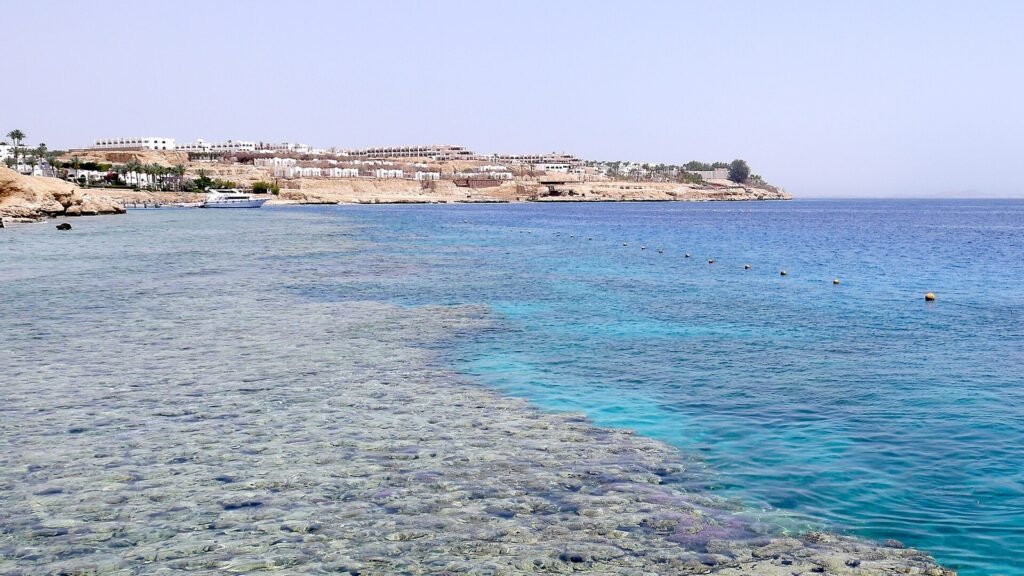
Egypt has two coasts, the Red Sea in the east and the Mediterranean in the north, and Egypt coastlines offer very different holidays. The Red Sea is known for clear water, reefs, diving and resort towns, while the Mediterranean side has city waterfronts and summer beaches. This guide covers the main coastal areas, the real safety points on the water and on land, and the advice from the governments we read.
Advice about areas to avoid applies on the coast as well, so check your government’s map before you book. The Canadian, British, Australian and US pages explain their current levels, and our Egypt travel guide summarizes them. Beach descriptions below are general, and conditions change with the season.
Egypt Coastlines: Where to Start
For a first trip, most travelers choose one Red Sea base and combine it with Cairo or the Nile. Hurghada is a large, busy resort hub with many flights. El-Gouna is a planned resort town nearby. Marsa Alam is quieter and further south. Sharm el Sheikh and Dahab sit on the Sinai Peninsula. In our view, choose based on whether you want activity, calm or diving.
Hurghada, el-Gouna and Safaga
Canada names Hurghada, el-Gouna, Safaga, Soma Bay and Ain el-Sokhna among Red Sea resorts where visitors should exercise a high degree of caution, saying the resort areas are generally considered safe but sporadic terrorist attacks have targeted foreign tourists in recent years. The UK says travel to Red Sea tourist areas in southern Sinai is generally low risk and that security forces carry out routine checks.
These towns offer day boats to reefs and islands, snorkelling and diving, kite and wind sports in some places, and desert excursions. Book excursions through your hotel or a reputable company.
Marsa Alam and the Southern Red Sea
Marsa Alam, further south, is known for quieter resorts and access to reefs. Travel distances are longer and medical care is more limited than in the big cities, so check where the nearest hospital and decompression facility are before booking dives. Canada says to exercise a high degree of caution here too.
Sinai: Sharm el Sheikh and Dahab
Sharm el Sheikh and Dahab are well-known diving and beach towns on the Sinai Peninsula. Read this section carefully, because the advice differs by government. Australia lists Sharm el Sheikh at “high degree of caution” and says to reconsider travel to the rest of South Sinai Governorate. Canada says to avoid non-essential travel north of the St Catherine to Nuweiba road, with exceptions including the Dahab to Taba road, and the US says not to travel to central and northern Sinai.
The UK says British travelers arriving by air at Sharm el Sheikh for stays under 15 days in the resort towns get a free entry stamp, while others need a visa. Regional borders, including the Taba crossing, can close at short notice.
The Mediterranean Coast
Alexandria is Egypt’s main Mediterranean city, with a waterfront, history and seafood. The coast west of it toward Marsa Matruh is popular with Egyptians in summer. Canada and Australia say unexploded landmines remain in some desert and coastal areas, including around El Alamein and parts of the Mediterranean coast, so stay on marked roads and paths and use developed beaches.
Getting to the Coast
Most visitors fly into Hurghada, Marsa Alam or Sharm el Sheikh, either directly or through Cairo. Road transfers between Red Sea resorts and the Nile Valley are possible, but they are long and Australia advises avoiding road travel where possible because of poor conditions. Check your government’s advice on any road route, particularly through desert areas, and travel in daylight. Alexandria is reached from Cairo by road or rail.
If you are connecting a beach stay with the sites, fly between them when you can. In our view, Egypt coastlines are easiest to enjoy when you treat them as a separate, restful leg at the end of a trip.
Reefs, Desert Excursions and Day Trips
Popular days out include boat trips to reefs and islands, glass-bottom boats, snorkelling stops and desert excursions by four-wheel drive or quad bike. The UK reports several serious quad bike accidents in resort areas and advises always wearing a helmet. Book through your hotel or a reputable operator, confirm what insurance covers and ask where the nearest medical help is.
Protected reefs and parks may charge fees or limit access. Ask your operator which rules apply and follow them.
Diving, Snorkelling and Boat Safety
The Red Sea is a major dive destination, and the safety advice is specific. The UK says there have been recent incidents involving British nationals on diving boats and tours, some fatal, that standards vary considerably and that some operators lack adequate safety and insurance.
- Book liveaboards and dive trips only with reputable operators who can show their safety standards.
- Ask for a safety briefing before departure, and check life jackets, oxygen and radio equipment.
- Stay within your training and your insurance depth limit.
- Check that your insurance covers rescue, which the UK says can cost more than 4,000 US dollars per hour.
Shark attacks are rare but have happened in the Red Sea, according to the UK, so follow local updates and your operator’s instructions. Our travel insurance and safety guide explains adventure activity cover.
Beach Etiquette and Wildlife
Beachwear is accepted at resort beaches and pools, but dress modestly away from them. Do not touch or stand on coral, take shells or feed fish. The reefs are fragile, and many are protected. Use reef-safe habits such as covering up instead of relying only on sunscreen.
Landing on remote beaches or camping needs care, because some areas are restricted and checkpoints are common. Australia says officials at checkpoints have detained and harassed foreigners, so carry your passport and visa.
Seasons and Sea Conditions
We did not find an official month-by-month guide, so this is our view. Spring and autumn are comfortable for the Red Sea, summer is very hot but the water is warm, and winter days can be breezy and cooler, especially in the north. Wind is a feature of some Red Sea towns, which suits kitesurfing. The Mediterranean beach season is mainly summer.
Practical Details for the Coast
Use licensed taxis or hotel transport. Canada and the UK say road accidents are common, and the UK advises against driving outside main cities and resorts at night. Carry small cash, keep valuables out of sight on beaches, and save the emergency numbers: Canada gives 112 for police and 113 for medical help, and the UK gives 123 for an ambulance.
What to Pack for the Coast
Pack swimwear and a rash guard, a wide-brimmed hat, sunscreen, water shoes for rocky entries, modest clothes for town and any dive certification and logbook. Bring prescription medicines in their original containers, since some items are restricted. Our packing guide has a full list.
Choosing Your Coast
Choose Hurghada or el-Gouna for variety and easy flights, Marsa Alam for calm and reefs, Sinai for diving towns if your government’s advice allows, and the Mediterranean for a summer city break. In our view, travelers who mainly want to relax will be happiest in a well-reviewed resort with a house reef.
Comparing the Main Coastal Bases
In practice the choice is simple. Hurghada offers the most flights, hotels and day trips, so it suits first visits and families. El-Gouna feels more contained and walkable, with a calmer resort atmosphere. Marsa Alam is the pick for travelers who want reefs and quiet and do not mind distance. Sharm el Sheikh and Dahab appeal to divers, subject to the Sinai advice above, and Alexandria suits travelers who prefer a city with sea views to a beach resort.
Whichever base you choose, read recent reviews about water access, since some hotels have a jetty or a house reef and others do not. Egypt coastlines reward travelers who check the details before they book, from reef access to transfer times and cancellation rules.
Experience Egypt Beyond the Beach
Egypt coastlines work best as part of a wider trip. Pair a few Red Sea days with Cairo and Luxor, book water activities with care, and keep your government’s advice close. Our 10 day Egypt itinerary shows the classic inland route. For more planning, read our Egypt travel guide, our guide to what to eat in Egypt and our guide to Egypt culture and local customs.