
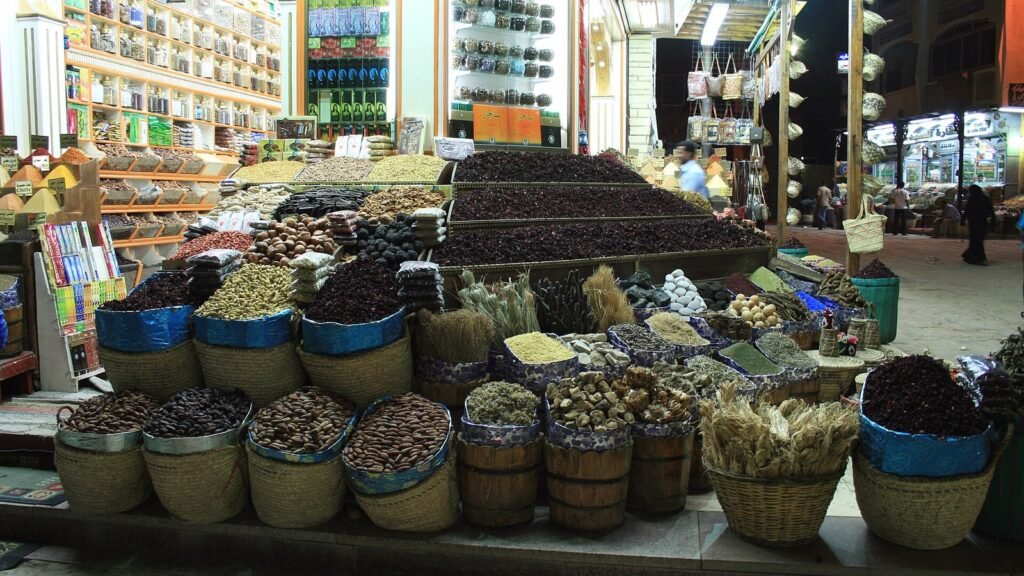
If you are wondering what to eat in Egypt, start with the everyday dishes. Egyptian cooking is built on beans, lentils, rice, bread, vegetables and grilled meat, with sweet pastries and plenty of tea, and many of the best things are cheap, simple and sold from small shops and stalls. We did not find an official national food guide, so the descriptions below are general descriptions of well-known dishes, and recipes vary from family to family.
Food and drink safety has its own points, which we cover later, using advice from Smartraveller and the US health agency CDC. Our Egypt travel guide has the full safety summary, including the Canadian advice on areas to avoid.
What to Eat in Egypt: Start with the Basics
A typical meal often includes flatbread, a bean or lentil dish, salad, pickles and a dip such as tahini. In many homes and casual restaurants, food is shared from the middle of the table and bread is used to scoop. In our view, following your host’s lead is the easiest way to learn, and nobody expects visitors to be perfect.
Egyptian food is generally flavorful rather than very spicy, with garlic, cumin, coriander and onion doing much of the work. Vegetarian travelers have plenty of choice, although you should ask whether broth or meat stock is used.
Koshari, Ful and Ta’ameya
Koshari. Often described as Egypt’s national dish, koshari is a bowl of rice, lentils, pasta and chickpeas topped with a tomato sauce, fried onions and a garlic-vinegar dressing. It is filling, meat-free and sold in dedicated shops.
Ful medames. Slow-cooked fava beans, usually seasoned with oil, lemon and cumin, are a classic breakfast, eaten with bread.
Ta’ameya. Egypt’s version of falafel is made from fava beans and herbs, fried and tucked into bread with salad and tahini. It is a popular morning snack.
Main Dishes
Molokhia. A thick green soup made from jute leaves, often cooked with garlic and served with rice and chicken or rabbit. The texture surprises some visitors.
Mahshi. Vegetables or vine leaves stuffed with spiced rice and herbs, common at family meals.
Fatta. A rich dish of rice, bread, meat and a garlicky tomato sauce, often served at celebrations.
Hawawshi. Spiced minced meat baked inside bread, a satisfying street-food option.
Grills, Pigeon and Seafood
Kebab and kofta. Skewered and minced grilled meats are served with bread, salad and tahini at grill restaurants.
Hamam mahshi. Stuffed pigeon, filled with rice or cracked wheat, is a specialty you may see on menus in Cairo and the Nile Delta.
Seafood. On the Mediterranean and Red Sea coasts, fresh fish, often grilled or fried, is a popular choice. Choose busy restaurants and confirm the price before ordering, as the UK and Australia warn about overcharging in tourist areas.
Breads, Snacks and Sweets
Aish baladi. This round whole-wheat flatbread is part of most meals. Feteer is a flaky layered pastry eaten sweet or savory.
Sweets. Look for umm ali, a warm bread pudding with milk and nuts; basbousa, a semolina cake soaked in syrup; kunafa, a shredded pastry dessert; and baklava. Dates and fresh fruit are good in season.
Breakfast in Egypt
Breakfast is one of the best meals to try early in a trip. A typical spread includes ful, ta’ameya, white cheese, eggs, bread, pickles and tomatoes, with tea. Hotels serve international buffets as well, but a local breakfast shop is quick, inexpensive and busy in the mornings, which is a good sign of fresh food.
If you are on an early excursion, ask your hotel for a packed breakfast. In our view, eating a solid meal before a long day at the sites helps in the heat.
Regional Food in Egypt
Food changes from place to place, although the classics appear almost everywhere.
- Cairo and the Nile Delta: koshari shops, grill restaurants, pigeon dishes and large markets.
- Alexandria and the north coast: fish and seafood, often chosen from a display and cooked to order, and Mediterranean-style salads.
- Luxor, Aswan and the south: hearty stews, bread baked in the sun in some villages, and Nubian dishes in Aswan, where some visits include a meal in a Nubian home or village.
- Sinai and the desert: grilled meat and bread cooked in the sand or over embers, often served as part of a desert excursion.
Descriptions of regional food are general, so ask your guide what is typical where you are.
Vegetarians and Special Diets
Egyptian food suits vegetarians well, with koshari, ful, ta’ameya, lentil soup, stuffed vegetables, dips and salads. Some soups and rice dishes use meat stock, so ask. Vegans should check for butter and ghee, which are widely used. If you have an allergy, learn the Arabic words for your allergen or carry a written note, since menus may not list ingredients.
Dining Etiquette
Wash your hands before eating, and use your right hand if you eat with your hands from a shared dish. In homes, a host may keep offering food, and a polite way to finish is to leave a little and say you are full. In restaurants, wait for your host to start when you are a guest, and offer thanks at the end of the meal. In our view, relaxed, friendly manners matter far more than perfect form.
Drinks
Tea is served all day, often strong and sweet, and sometimes with fresh mint. Egyptian coffee is thick and served in small cups. Hibiscus tea (karkade) is drunk hot or cold, and fresh sugarcane juice is sold at street stands.
Alcohol is available in licensed restaurants, hotels and resorts, but Canada and the UK say drinking elsewhere is prohibited and can lead to arrest. Buy drinks only from licensed places, never accept drinks from strangers, and keep your glass in sight.
Markets and Food Experiences
When people ask what to eat in Egypt on a first visit, markets and bakery streets are our usual answer, because you can try several things in one walk. Canada and Australia say to be alert to pickpockets and to keep valuables out of sight in crowded places. In our view, a guided food walk in Cairo or Luxor is a comfortable way to try street food on your first days, with someone who knows which stalls are busy and clean.
What to Eat in Egypt on a Nile Cruise
Cruise boats usually serve buffet meals that mix Egyptian and international dishes, and many offer an Egyptian-themed dinner. Tell the crew about dietary needs on the first day, choose food that is cooked and served hot, and be careful with buffet items that have been sitting out.
Eating and Drinking Safely
Smartraveller says to drink only boiled or bottled water. The CDC recommends hepatitis A and typhoid protection for many travelers and advises safe food and water habits, including washing your hands at key times. In our view, choose busy stalls, eat food that is freshly cooked and hot, peel fruit yourself and be careful with salads washed in tap water, and skip ice unless you know it is made from bottled water. Our travel insurance and safety guide explains medical cover, which matters if a meal disagrees with you.
Tipping. We did not find an official source on tipping, so this is our view. Small tips, often called baksheesh, are common for waiters, porters, guides and restroom attendants. Carry small notes and agree on prices for services in advance.
Ramadan. The UK advice says not to eat, drink or smoke in public during daylight hours in Ramadan, and some hotels and restaurants serve non-fasting guests behind screens. Evenings bring shared meals to break the fast, which many visitors enjoy.
Dining Out and Paying
Restaurants range from standing counters to hotel dining rooms. At casual shops you often order and pay at a counter, then collect your food, while sit-down restaurants bring a bill to the table. Some bills include service and taxes, so read the bill before you add a tip. Carry small notes, since change can be limited.
In tourist areas, check that menu prices are shown or agree them first. If a street vendor or restaurant quotes a price that seems unclear, ask again before you eat. In our view, a short, friendly question avoids most misunderstandings, and following where local families eat is a reliable way to find a good meal.
Food to Take Home
Dates, spice blends, hibiscus flowers and packaged sweets are popular gifts. Check your own country’s customs rules before packing food, because many countries restrict fresh produce, meat, dairy and some plant products. Keep receipts and original packaging where you can.
Experience Egypt Through Its Food
The best way to understand what to eat in Egypt is to try a few simple dishes first, then follow your curiosity. Start with koshari, ful and ta’ameya, add a grilled meal and a sweet, and finish with tea. Ask your guide or host what is in season and where they like to eat.
For more planning, read our Egypt travel guide, our guide to Egypt culture and local customs and our guide to Egypt coastlines. If you are planning your budget, see our guide to using money abroad.