
Indonesia is an archipelago, so almost every trip involves the sea. Some visitors want a beach day or a snorkeling trip, others plan a dive holiday or a boat journey to see Komodo dragons. This guide to Indonesia coastlines explains the main coastal regions, how the seasons and safety conditions affect them and how to choose where to go.
It focuses on Bali, Lombok and the Gili Islands, Flores and Komodo, and Raja Ampat, with notes on other marine regions. Conditions, fees and government advice change, so use this guide to plan and then confirm the details with official sources before you book.
Indonesia Coastlines: Where to Start
For a first trip, Bali is the easiest coastline to reach, with a range of beaches, cliffs and offshore islands. Lombok and the Gili Islands are a natural extension for beaches and snorkeling. Flores and Komodo suit travelers who want wild scenery and the Komodo dragons, and Raja Ampat is a remote diving region for a longer trip.
Indonesia coastlines are not like a typical resort coastline. Many beaches are unpatrolled, boats are the main transport between islands, and some regions are far from major hospitals. Smartraveller notes that many beaches are unpatrolled and can be dangerous because of rough seas and strong currents, and that commercial and private boat operators may not meet international safety and maintenance standards. None of that means you should avoid the coast, but it does mean you should plan carefully.
Bali: Cliffs, Beaches and Offshore Islands
Bali’s southern Bukit Peninsula is known for cliffs and beaches, and Ubud and central Bali are inland. Beaches vary a great deal. Some are sheltered and calm, while others have strong surf and currents that suit experienced swimmers or surfers only.
Offshore islands such as Nusa Penida and Nusa Lembongan are a short boat trip from Bali’s coast and popular for day trips. Boat conditions, landing arrangements and sea conditions can change quickly, so choose a reputable operator, check that life jackets are available for every passenger and be ready to change plans if the sea is rough.
Before you arrive in Bali, remember the paperwork. Foreign tourists pay a tourist levy of IDR 150,000 through the official Love Bali site, separate from the visa. Our 10 day Indonesia itinerary includes two nights on the Bukit coast.
Lombok and the Gili Islands
Lombok lies east of Bali and offers beaches, hills and the Rinjani volcano area. The Gili Islands, a group of small islands off Lombok, are popular for snorkeling, diving and relaxed beach stays.
The CDC’s malaria guidance separates the two. It lists West Nusa Tenggara, including Lombok, as a malaria transmission area, while it says the Gili Islands have no malaria transmission. Ask a travel clinic about your exact route and whether you need prevention medication. Canadian advice also notes that pickpocketing and bag snatching occur in tourist areas such as Bali and Lombok.
Fast boats link Bali, Lombok and the Gili Islands. Smartraveller’s warning about boat standards applies here, so choose an operator carefully, check for life jackets and avoid overloaded vessels.
Flores and Komodo National Park
Flores and Komodo are reached through the town of Labuan Bajo. UNESCO describes Komodo National Park as three major islands, Rinca, Komodo and Padar, plus many smaller ones, with around 5,700 giant lizards found nowhere else. The landscapes are dry savannah hills, white sand beaches and blue water over coral.
Most visitors take a day trip or an overnight boat trip. Park fees, ranger guides and booking rules have changed several times in recent years, and commercial websites disagree on the current figures, so confirm the current rules with the park authority or a licensed operator before you pay. Follow your ranger’s instructions, because Komodo dragons are wild animals.
Two health and safety notes matter here. The CDC lists Labuan Bajo and the Komodo Islands among the malaria transmission areas in eastern Indonesia, so ask a travel clinic about prevention. Canadian advice also notes a magnitude 7.7 earthquake near Flores Island on 14 August 2026, with aftershocks continuing at the time of its last update, so check current conditions and your insurance before booking.
Raja Ampat
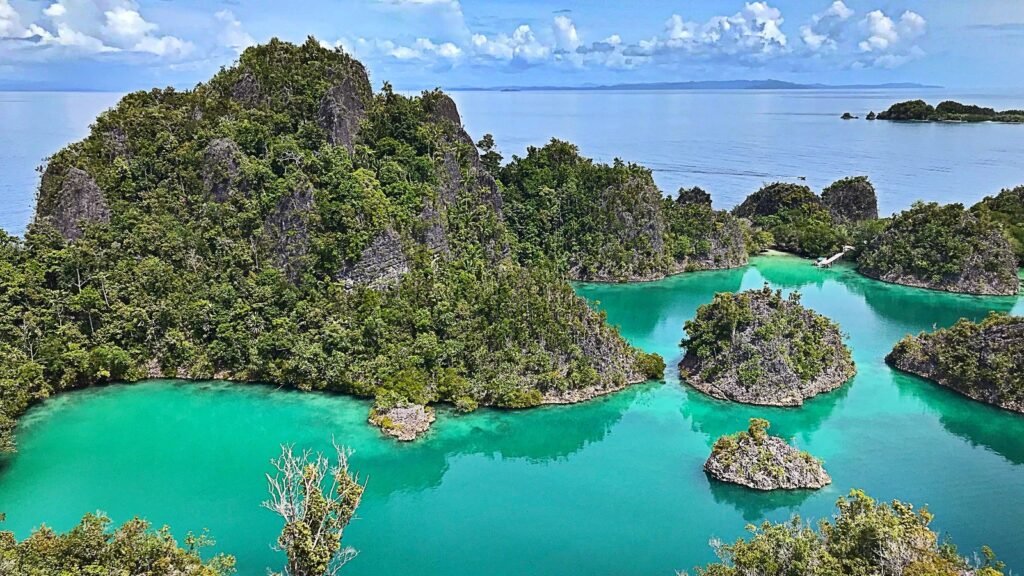
Raja Ampat in Southwest Papua is one of Indonesia’s best-known diving and snorkeling regions, and it is remote. UNESCO lists the Raja Ampat Islands on Indonesia’s Tentative List, which means the country intends to consider them for nomination, not that they are already World Heritage Sites.
Canadian advice recommends avoiding non-essential travel in Indonesian Papua but makes an exception for the Raja Ampat Regency islands and the city of Sorong, and it also says you need a permit to travel in Papua. Read the current advice before you plan. Visitor fees and the marine park permit have been changing, and a January 2026 report said the regency raised its fees for international visitors, so confirm the current amounts with the marine park authority or your operator. The CDC lists eastern Indonesia, including Papua and West Papua, as a malaria transmission area.
Raja Ampat suits travelers with more time, a larger budget and an interest in diving or snorkeling. Allow for flights, boat transfers and weather.
Other Marine Regions
Indonesia has many other marine areas. UNESCO’s Tentative List for Indonesia includes Bunaken National Park, Wakatobi National Park, the Derawan Islands and Taka Bonerate National Park, all listed in 2005. These regions are known for coral reefs and marine life and are usually visited by divers on dedicated trips. Plan them as separate expeditions, because transport can be limited.
Weather and the Best Coast for Your Travel Dates
Canadian advice says the rainy season runs from November to March, with flooding and landslides possible in parts of Bali and Jakarta. Australia’s advice says the wet season is usually around October to April and can be different in eastern Indonesia. Canadian advice also warns of haze from burning in Sumatra and Kalimantan from June to October, and notes that El Niño conditions were expected to strengthen through 2026 into 2027, which can raise the risk of drought, floods and severe storms.
The best season for Indonesia coastlines depends on the region, but as a rule of thumb the drier months, roughly April to October, are the most comfortable for beach days in Bali and Lombok, but they are also the busiest. Eastern regions can follow different patterns, so check forecasts and operator advice for Flores, Komodo and Raja Ampat close to your dates. Heavy rain can also affect sea conditions and visibility for snorkeling and diving.
Swimming and Beach Safety
Treat every unfamiliar beach carefully:
- Check conditions. Ask your accommodation or a local lifeguard about currents and safe swimming areas.
- Swim where others swim. Many beaches are unpatrolled, according to Smartraveller, so do not swim alone in rough water.
- Avoid floodwater. Smartraveller and the CDC warn about leptospirosis after heavy rain and floods, so avoid walking or swimming in floodwater.
- Respect warnings. Flags, signs and local advice matter, particularly after storms.
- Know the tsunami basics. Canadian advice says tsunamis can arrive within minutes. If you feel strong, long shaking near the coast, move to higher ground and follow official guidance.
If you plan to dive, use a licensed operator, make sure safety equipment works and check that your travel insurance covers diving. Smartraveller advises that functioning safety equipment should be available for adventure activities and that your policy should cover them.
Responsible Coastal Travel
Indonesia’s reefs and marine life are fragile. Do not stand on or touch coral, do not feed fish or marine animals, and keep a respectful distance from wildlife. Take your rubbish with you, use reef-safe sunscreen if available, and choose operators that follow park rules.
Do not litter, which is on Bali’s official list of things not to do. Dress modestly away from the beach, because customs in villages and towns are more conservative than at a beach resort.
Getting to the Coast
Domestic flights link Bali with many islands, and boats link nearby islands. Canadian advice says ferry accidents are common and recommends checking that life jackets are available for all passengers and avoiding overloaded or unseaworthy vessels. Allow buffer days before international flights, because weather can delay boats and flights.
If you rent a scooter to reach a beach, remember that Canadian advice says motorcycle and scooter crashes are the leading cause of death and serious injury among foreigners in Indonesia, including in Bali. A hired driver is the safer option. Our Indonesia travel guide covers entry rules, driving and health in detail.
Choosing the Right Indonesia Coast
Indonesia coastlines suit different travelers, so match the coast to your plans:
- For a first trip with other sights: Bali’s Bukit coast, combined with Ubud and Yogyakarta.
- For relaxed snorkeling and beach days: Lombok and the Gili Islands, with attention to boat safety.
- For wild scenery and wildlife: Flores and Komodo National Park, after checking current conditions.
- For serious diving: Raja Ampat, Bunaken, Wakatobi and other dedicated dive regions, on a longer trip.
Adding the Coast to an Indonesia Itinerary
On a 10-day trip, one coastal stop is enough. Our 10 day Indonesia itinerary ends with two nights on Bali’s Bukit Peninsula. With 14 days, add Lombok and the Gili Islands, or Flores and Komodo, rather than spreading your time across too many islands. Allow extra days for weather and boat schedules.
Experience Indonesia Beyond the Coast
The coast is only one part of the country. Temples, rice terraces, markets and living traditions are just as important, and a good trip combines them. For more, read our guide to Indonesia culture and local customs and our guide to what to eat in Indonesia.
Use this guide to Indonesia coastlines as a starting point, check the current advice and conditions, and choose the coast that fits your time and comfort level on the water.
If you’re comparing coastal destinations in Asia, you may also want to read our guides to Thailand coastlines and island destinations and Vietnam coastlines and beach destinations.