
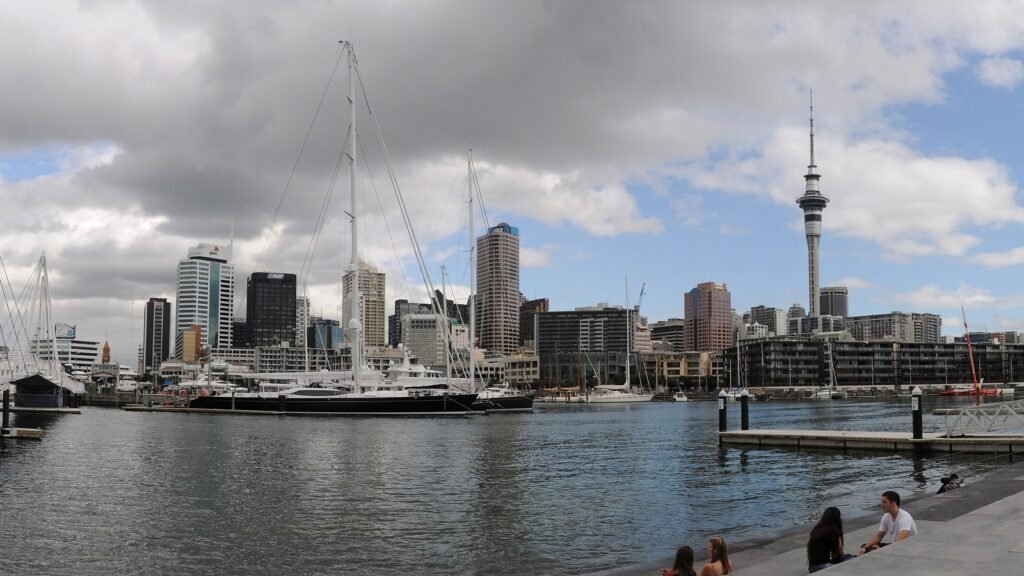
This New Zealand travel guide is designed to help you decide where to go, when to visit and how to plan a realistic first trip to a country that looks small on a map but takes longer to cross than most visitors expect.
New Zealand has two main islands, the North Island and the South Island. Tourism New Zealand says about five million people live there, more than three-quarters of them in the North Island and about a third in Auckland. Visitors come for volcanic and geothermal landscapes, fiords, alpine lakes, coastlines, wine and Māori culture, which Tourism New Zealand describes as a core part of the national identity. UNESCO lists three World Heritage properties in New Zealand: Tongariro National Park, Te Wāhipounamu South West New Zealand and the New Zealand Sub-Antarctic Islands.
The main planning issues are distance, season and paperwork. The seasons are the reverse of the Northern Hemisphere, the weather can change within a day, and many visitors, including Canadians, need an electronic travel authority and a traveller declaration before they fly. New Zealand also has strict biosecurity rules. With a few bases, early bookings and some preparation, most visitors have a smooth trip. The sections below explain the details.
Is New Zealand Right for Your Trip?
This New Zealand travel guide is a good fit if you want a first trip built around landscapes, short walks and long hikes, wildlife, wine regions, road trips and Māori cultural experiences. Tourism New Zealand describes Kiwis as friendly and down-to-earth, and says the country suits outdoor adventure, family trips, food and wine, cultural experiences or a bit of everything.
New Zealand may not be the right fit if you only have a few days, dislike long drives or hope to see both islands in a week. Tourism New Zealand’s FAQ gives about eight hours by car from Auckland to Wellington and about six hours from Christchurch to Queenstown. It also calls New Zealand a mid- to high-cost destination compared with many countries. Reaching New Zealand from North America means a long flight across the International Date Line, so the calendar jumps ahead and you land a day or more after you leave.
Best Time to Visit New Zealand
New Zealand’s seasons are the reverse of the Northern Hemisphere’s. Tourism New Zealand gives summer as December to February, autumn as March to May, winter as June to August and spring as September to November, and says the country can be visited all year.
Summer. This is the busy high season, with sunny beach days, water activities and mountain hiking. Tourism New Zealand gives average daytime temperatures of 20 to 25°C (68 to 77°F) and says daylight can last until about 9:30 pm. Local holidays also mean more Kiwis are on the road.
Autumn and spring. These are the quieter shoulder seasons, and Tourism New Zealand says you will often find more availability and better rates. Autumn days are still warm early in the season, with beach swims possible into April in some places. Spring warms up, but rain is likely, and warm days and cool nights are common.
Winter. June to August is the season for snow sports, with Queenstown, Wānaka and the Central Plateau of the North Island the busiest areas and the highest snowfall usually in July and August. Coastal areas and cities such as Auckland and Wellington are less crowded. If you drive in snow-prone areas, carry chains and take extra care.
Weather in general. Tourism New Zealand says the weather can change quickly and jokes that you can experience four seasons in one day, so pack a raincoat whatever the month. Rainfall is high and spread through the year. The sunniest places are the Bay of Plenty, Hawke’s Bay and Nelson/Marlborough. Canadian advice adds that El Niño conditions are expected to strengthen into 2027, so check the forecast with MetService before you commit to dates.
Where to Go in New Zealand
Most first trips choose from a handful of regions. The drive times below come from Tourism New Zealand’s regional pages.
Auckland. Auckland has the Sky Tower, regional parks, black-sand surf beaches on its west coast and the Hauraki Gulf islands. Waiheke Island, known for vineyards, is a 40-minute ferry ride from downtown.
Bay of Islands and Northland. The Bay of Islands has 144 islands and the Waitangi Treaty Grounds. It is about a four-hour drive from Auckland, or a short flight.
The Coromandel. The Coromandel is about two hours 40 minutes from Auckland and has more than 400 kilometres of beaches, including Cathedral Cove.
Rotorua. Rotorua is about three hours from Auckland and is described as New Zealand’s geothermal heartland, with a strong Māori cultural scene.
Tongariro and Wellington. Tongariro National Park is dual World Heritage listed for its natural and cultural values. Wellington is the compact capital at the southern end of the North Island, with the national museum Te Papa and the ferry to the South Island.
Nelson and Abel Tasman. Abel Tasman National Park has golden beaches, a 60-kilometre coast track and water taxis, and sits in one of the sunniest regions of the country.
Christchurch and Canterbury. Christchurch and Canterbury reach from the Pacific coast to the Southern Alps, with Kaikōura, Lake Tekapo and Aoraki / Mount Cook within reach.
Queenstown and Fiordland. Queenstown sits on Lake Wakatipu and is about six hours by road from Christchurch. Fiordland National Park is part of the Te Wāhipounamu World Heritage area, and Milford Sound is the only one of its fiords you can reach by road.
How Many Days Do You Need?
Tourism New Zealand does not give a single recommended length, and its sample routes range from about a week on one island to three weeks or more for both. In our view, a week suits one island with two or three bases. Ten days works for a first trip that combines Auckland, Rotorua, Queenstown and Christchurch with one domestic flight. Two weeks or more lets you add the Bay of Islands, Abel Tasman, Kaikōura or a hike.
Roads are winding and drive times add up, so avoid adding too many bases. Our 10 day New Zealand itinerary shows one realistic route.
Getting Around New Zealand
Driving. Tourism New Zealand’s FAQ says the best way to travel is by car or campervan, that vehicles drive on the left and that rural roads can be narrow and winding. The road rules set a maximum of 100 km/h on open roads and 50 km/h in urban areas, require seat belts in front and back seats, ban hand-held phones and forbid passing where the centre line is yellow. Canadian advice warns of drink-driving, excessive speed, roaming animals and dairy herds crossing roads, and railway crossings that may not have barriers.
Read the Drive Safe guide and the NZ Transport Agency’s visitor page, and check the NZTA road closures before long drives.
Domestic flights, buses and trains. Domestic flights link the main cities and save time between islands. Tourism New Zealand says buses and trains connect major towns but have limited coverage.
The Cook Strait ferry. Interislander and Bluebridge both run ferries between Wellington and Picton. Tourism New Zealand describes a crossing of about three and a half hours, with Bluebridge offering an overnight sleeper service. Check the operators’ current timetables.
Costs and Budgeting
Tourism New Zealand calls New Zealand a mid- to high-cost destination compared with many countries. It suggests hostels, campsites and holiday parks, and says that driving yourself and cooking some of your own meals can reduce costs. Shoulder seasons often bring better rates. The currency is the New Zealand dollar, and Tourism New Zealand says credit and debit cards, including contactless payments, are widely accepted.
Its currency page says tipping is not obligatory, even in restaurants and bars, and that hotels and restaurants do not add service charges. It also says the 15% Goods and Services Tax is included in displayed prices and that visitors cannot claim it back. For help building a budget, see our travel budgeting guide.
Food and Dining
New Zealand’s food mixes Māori, Pacific and contemporary influences. Tourism New Zealand highlights seafood, lamb, hāngī, fish and chips, pies, pavlova and wine. Our guide to what to eat in New Zealand explains the dishes, drinks and markets, and our food and dining guide has general tips for eating well while traveling.
What to Know Before You Go
These are the practical points that most often affect a first trip.
Entry. Canadian advice says Canadians do not need a tourist visa for stays of up to 90 days but must get an NZeTA online before arrival, even when transiting. It is valid for up to two years and allows multiple entries. Immigration New Zealand says visa waiver visitors can stay up to three months per visit (six months for UK citizens), and that you can apply by website or app and should allow up to 72 hours. You also pay the International Visitor Conservation and Tourism Levy when you request the NZeTA.
Everyone entering must also complete the free New Zealand Traveller Declaration by website or app. Canadian and UK advice says your passport should be valid for at least three months beyond the date you leave, but Tourism New Zealand’s FAQ says six months, so check with your airline. Other passports have different rules, so see our visa requirements guide and Immigration New Zealand before you book.
Biosecurity. The Ministry for Primary Industries says biosecurity risk items must be declared or put in a disposal bin on arrival, and that failing to declare risk goods can mean a $400 instant fine or prosecution. Risk items include some foods, sports and outdoor equipment, and animal and plant products. Use the MPI item checker, and if you are unsure, declare it. Used hiking boots and camping gear are common risk items, so clean them before you fly.
Health and insurance. Canadian advice says health care is good and recommends insurance that covers medical evacuation and hospital stays. New Zealand’s accident scheme is unusual: ACC says it covers visitors injured in an accident in New Zealand, but not illness, disrupted travel plans, emergency travel home, or treatment and rehabilitation once you are back home. You still need travel insurance. Read our safety and insurance guide and speak to a travel health provider before you go.
Earthquakes, volcanoes and tsunamis. Canadian advice says New Zealand is in an active seismic zone and that a tsunami can follow a nearby earthquake within minutes. Tourism New Zealand’s safety page says to Drop, Cover and Hold in a large earthquake and, if you are in a tsunami zone and the shaking is long or strong, to move to high ground as soon as it stops. Volcanic alert levels change, so check GeoNet before visiting volcanic areas, and stay on the walkways in thermal areas, where pools can be hotter than 100°C and crusts can be thin.
Outdoors and weather. Canadian advice says weather can change rapidly even in summer, trails are not always marked and mobile coverage can be poor in remote areas. The Land Safety Code from the Department of Conservation and AdventureSmart sets out five simple steps: choose a suitable trip, understand the weather, pack warm clothing and extra food, share your plans and know how to get help, and look after yourself and others. Hire a guide for challenging walks and consider a distress beacon.
Sun, sandflies and water. Tourism New Zealand says the sun is stronger than in many countries and advises sun protection from September to April, especially between 10 am and 4 pm, even on cloudy days, with shade, a shirt, hat and sunglasses and SPF 30+ sunscreen. It says the sandflies in Fiordland are legendary, so carry insect repellent. Canadian advice says riptides are common and several drownings occur each year, so swim between the flags at patrolled beaches and avoid unsupervised ones.
Safety and emergencies. Canadian advice is to take normal security precautions. Petty crime such as pickpocketing and bag snatching occurs, especially in major cities and from unattended vehicles. Dial 111 for emergency services. Tourism New Zealand also lists a free Visitor Safety text service. Read the full Government of Canada travel advice for New Zealand before you book.
Power and plugs. Tourism New Zealand’s power guide says New Zealand uses the Type I plug with mains supply of 230 to 240 volts at 50 Hz, so Canadian plugs need an adapter, and devices rated for lower voltages may need a converter.
Suggested First-Time New Zealand Itinerary
If you have 10 days, a workable first-time route is Auckland, Rotorua, Queenstown with a Milford Sound day, and Christchurch. It uses four bases and one domestic flight.
Days 1 and 2: Auckland. See the city and harbour, and take the ferry to Waiheke Island or climb a volcanic cone if you have the energy.
Days 3 and 4: Rotorua. Drive south, see the geothermal sights and book a Māori-owned cultural experience.
Days 5 to 7: Queenstown. Fly south, enjoy the lake and mountains and set aside one long day for Milford Sound by road, coach or scenic flight.
Days 8 to 10: Christchurch. Fly or drive north, explore the city and head home.
With 14 days, add the Bay of Islands, Abel Tasman or the Coromandel rather than more stops on your route. With a week, choose one island. Our full 10 day New Zealand itinerary has the day-by-day plan.
New Zealand Travel FAQ
Do I need a visa to visit New Zealand?
Canadian travel advice says Canadians do not need a tourist visa for stays of up to 90 days but must get an NZeTA (New Zealand electronic travel authority) online before they arrive, even when transiting, and pay the International Visitor Conservation and Tourism Levy when they request it. The NZeTA is valid for up to two years and allows multiple entries. Immigration New Zealand says visa waiver visitors can stay up to three months per visit, or six months for UK citizens. Everyone also completes the free New Zealand Traveller Declaration. Canadian and UK advice says your passport should be valid for at least three months beyond the date you leave, although Tourism New Zealand’s FAQ says six months, so check with your airline. Other nationalities have different rules, so confirm them with Immigration New Zealand.
What is the best time to visit New Zealand?
New Zealand can be visited all year, and the seasons are the reverse of the Northern Hemisphere. Tourism New Zealand calls summer (December to February) the busy high season, says spring and autumn are quieter and often better value, and says winter is the season for snow sports in places such as Queenstown and Wānaka. The weather can change within a day, so pack layers and a raincoat. Canadian advice also says El Niño conditions are expected to strengthen into 2027.
How many days do you need in New Zealand?
Ten days works for a first trip that combines Auckland, Rotorua, Queenstown and Christchurch with one domestic flight. A week suits one island, and two weeks or more lets you add places such as the Bay of Islands, Abel Tasman or Kaikōura. Tourism New Zealand gives about eight hours by car from Auckland to Wellington and about six from Christchurch to Queenstown, so avoid adding too many bases.
Is New Zealand safe for tourists?
Canadian advice is to take normal security precautions. Petty crime such as pickpocketing and purse snatching occurs, especially in major cities and from unattended vehicles. The bigger risks for visitors are often natural: changeable weather and remote trails, riptides, earthquakes and tsunamis, volcanic and thermal areas, and strong sun. Swim between the flags, follow the outdoor safety code and read the current advice before you go.
Do I need travel insurance for New Zealand?
Yes, you should buy it. ACC covers visitors injured in an accident in New Zealand, but it does not cover illness, disrupted travel plans, emergency travel home or treatment and rehabilitation once you are back home. Tourism New Zealand says medical services are not free to visitors except as a result of an accident, and Canadian advice recommends insurance that covers medical evacuation and hospital stays. Choose a policy that also covers any adventure activities you plan.
Final Thoughts on This New Zealand Travel Guide
New Zealand rewards travelers who plan around weather and distance. A first trip works best as an introduction rather than an attempt to see everything.
For a first visit, choose three or four bases, apply for your NZeTA before you fly, complete the Traveller Declaration, declare food and outdoor gear, buy travel insurance, protect yourself from the sun and respect the land and the culture. Tourism New Zealand’s Tiaki Promise asks visitors to care for land, sea and nature, travel safely and respect local communities.
Use this New Zealand travel guide as a starting point, then adjust the route to match your time, interests and comfort level with planning. For more help, see how to plan a better trip.
If you are thinking of combining New Zealand with a trip across the Tasman, see our Australia travel guide. If you’re comparing destinations in Asia and the Pacific, you may also want to read our Japan travel guide, Indonesia travel guide and Vietnam travel guide.
Explore more destination guides on TravelingInformed.