This Egypt travel guide is designed to help you decide where and when to go, how to move between Cairo, the Nile Valley and the Red Sea, and what the official safety and entry advice says before you book. Egypt rewards preparation. Its monuments are among the most famous in the world, and the advice about where to go, what to carry and how to behave is more detailed than for most destinations, so we start with the facts.
UNESCO lists seven World Heritage properties in Egypt, including the pyramid fields from Giza to Dahshur, Ancient Thebes around Luxor and the Nubian monuments from Abu Simbel to Philae. A first trip can link several of them along one route, and most visitors add Cairo and some time by the Nile or the Red Sea.
All four governments we read, Canada, Australia, the United Kingdom and the United States, ask visitors to take care in Egypt, mainly because of terrorism, and they restrict travel to some regions. The UK says about a million British people visit each year and most visits are trouble-free. The sections below explain both the risks and the practical habits, with dates.
Is Egypt Right for Your Trip?
This Egypt travel guide suits travelers who want ancient sites, river cruising, desert light, busy city life and Red Sea water in one trip. It works well for travelers who are happy with guided days, early starts and some negotiation, because the main sights are well established and organized tours are widely available.
Egypt may not be the right fit if you want to wander freely in remote areas, speak openly about politics online or in public, fly a drone, or photograph whatever you like. The laws on these points are strict. It is also not the best choice if the safety advice below worries you or if you cannot adapt your plans when regional events affect flights.
Egypt Safety: What Official Advisories Say
As of 25 November 2026, the advisories we read agree that terrorism is the main concern, but they use different levels and draw the restricted areas differently. Advisories change often, so read the current Canadian, British, Australian and American pages before you book and again before you fly.
Canada (updated 26 May 2026). The Government of Canada says to exercise a high degree of caution in Egypt because of ongoing tensions in the region, the unpredictable security situation and the threat of terrorism, with stronger advice for some regions.
Australia (updated 14 September 2026). Smartraveller advises Australians to exercise a high degree of caution in Egypt overall because of the threat of terrorism, with higher levels in some areas. It says the situation in the Middle East remains unpredictable and that regional tensions could disrupt air travel.
United States (issued 24 November 2026). The State Department lists Egypt at Level 2, “Exercise increased caution,” because of terrorism, crime and health, landmines and limited medical care in rural areas, with some areas at Level 3 and Level 4.
United Kingdom (public update 27 October 2026). The FCDO advises against travel to specific areas rather than the whole country. It says terrorists are likely to try to carry out attacks, which could be indiscriminate and include places visited by foreigners, and that the context in the Middle East remains deeply unpredictable after conflict that began in early 2026.
Areas the Governments Say to Avoid
The restricted areas matter more than the overall level, and they differ between governments. Check the map on your own government’s page.
North Sinai. All four governments restrict travel to North Sinai. Canada says to avoid all travel to northern Sinai, including parts of the Port Said, Ismailia and Suez governorates east of the Suez Canal, and the US says not to travel to central and northern Sinai.
The Libyan border and Western Desert. Canada says to avoid all travel within 50 km of the Libyan border and in much of the Western Desert west of the Giza, Luxor, Aswan and Abu Simbel road, with listed exceptions such as some oasis roads. Australia says not to travel within 40 km of the border, and the UK advises against all travel within 20 km and against all but essential travel to much of the desert, with exceptions. The US says to reconsider travel to the Western and Libyan Deserts.
South Sinai. Canada and the UK restrict or warn about the northern part of South Sinai, beyond the St Catherine to Nuweiba road, and Australia says to reconsider travel to the South Sinai Governorate except the southern coast around Sharm el Sheikh. If you plan to see Mount Sinai or Saint Catherine, read your government’s page carefully.
Border zones in the south and east. Several governments restrict the Hala’ib Triangle, the Sudanese border, the area east of the Suez Canal in Ismailia and the Bir Tawil area.
The usual tourist route of Cairo and Giza, Luxor, Aswan, Abu Simbel and the main Red Sea resorts is outside the “do not travel” areas, although it still carries the caution levels above. Canada names Red Sea resorts such as Hurghada, el-Gouna and Marsa Alam, and Aswan and Luxor, in its high-caution advice.
Other Safety Points
Demonstrations and politics. Canada, Australia and the UK advise avoiding all demonstrations and large gatherings. Canada says they are most likely on Fridays after noon prayers. The UK says the political environment is restrictive and that foreigners involved in political activity or who criticise the government online may be detained.
Crime and harassment. The UK says crime is generally low, and Canada says violent and petty crime has historically been low but has risen. Purse snatching and pickpocketing happen in tourist areas and on the metro. Canada and Australia say women, particularly foreigners, frequently face unwanted attention and harassment, and the UK reports sexual assaults, including cases in Red Sea resorts involving people the victim already knew.
Scams and touts. The UK warns about scammers and touts at tourist sites, and Australia says street taxi scams and overcharging occur. Agree prices before you accept a service, and use licensed taxis or those arranged by your hotel.
Roads, rail and boats. Canada says the accident rate is among the highest in the world, and the UK advises not driving outside main cities and resorts at night. There have been serious bus crashes, train accidents, ferry incidents and fatal Red Sea diving boat accidents. Book cruises, dive trips and excursions with reputable operators.
Landmines. Unexploded landmines remain in some desert and coastal areas, including around El Alamein, parts of the Mediterranean coast, the western shore of the Gulf of Suez and Sinai, according to Canada and Australia. Stay on marked paths and roads.
Best Time to Visit Egypt
We did not find an official page with month-by-month temperatures, so this section is our view. The cooler months, roughly October to April, are the comfortable season for Cairo, Luxor and Aswan, where summer heat can be intense, and they are also the busiest. Spring can bring dusty winds. The Red Sea is pleasant most of the year, although summer is very hot, and Cairo winter mornings can be cool. Egypt moves its clocks forward for summer, so check the time difference for your travel dates.
Ramadan changes opening hours and public behaviour, and its dates move each year, so check them before you book. The UK advises not eating, drinking or smoking in public during daylight hours in Ramadan.
Where to Go in Egypt
This Egypt travel guide covers the main places most first-time visitors link.
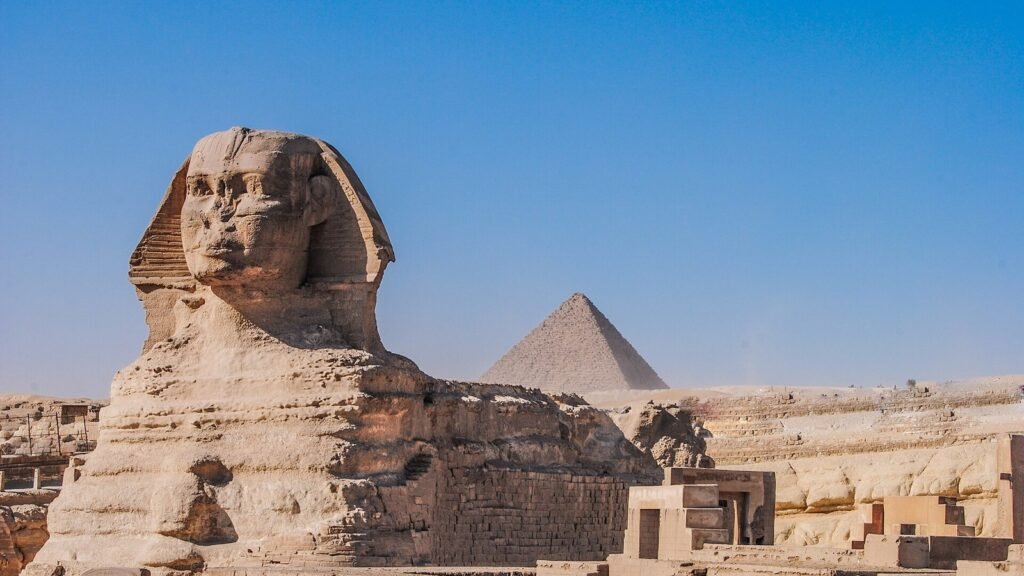
Cairo and Giza. The pyramids of Giza, the Sphinx and the museums sit beside one of the world’s largest cities. UNESCO describes Memphis and its Necropolis as including pyramids, tombs and temples from the Old Kingdom, and Historic Cairo as one of the world’s oldest Islamic cities, founded in the 10th century.
Luxor. UNESCO describes Ancient Thebes, with the temples of Karnak and Luxor and the Valley of the Kings and Queens, as a striking testimony to Egyptian civilization at its height.
Aswan and Abu Simbel. UNESCO says the Nubian Monuments, including the temples of Ramses II at Abu Simbel and the sanctuary of Isis at Philae, were saved from the rising waters of the Nile through an international campaign. Aswan is also the usual start or end of a Nile cruise.
The Red Sea. Hurghada, el-Gouna, Marsa Alam, Safaga and Sharm el Sheikh offer diving, snorkelling and beach time. See our Egypt coastlines guide.
Alexandria and the north coast. A Mediterranean city and coast with a different feel from the south. Read the landmine and demonstration notes before heading off the main roads.
How Many Days You Need
Ten days is a good length for a first trip that links Cairo and Giza, Aswan and Abu Simbel, a Nile cruise to Luxor and a night back in Cairo. Our 10 day Egypt itinerary sets this out day by day. A week suits Cairo plus Luxor by plane, and two weeks lets you add the Red Sea or Alexandria. Distances are long, and flights save time.
Getting Around Egypt
Flights. Domestic flights link Cairo with Luxor, Aswan, Abu Simbel and the Red Sea airports and are the simplest way to cover long distances. Regional events can delay or cancel international flights, so check with your airline.
Rail and buses. Canada says rail safety standards vary and there have been major accidents, and it advises avoiding microbuses. Use reputable operators.
Nile cruises. The UK says overcrowding and poor safety standards have caused accidents on Red Sea ferries and Nile cruises. Choose a well-reviewed company and ask about life jackets and safety briefings.
Driving. Canada recommends an international driving permit, and the UK says you need the 1949 version with your UK licence. Australia advises avoiding road travel where possible because of poor conditions and night driving without headlights. Hiring a driver through your hotel is often simpler.
Checkpoints. Australia and Canada say you may be stopped at military and civilian checkpoints. Carry your passport and visa, and follow instructions.
Costs and Money in Egypt
The currency is the Egyptian pound (EGP). Canada says you may carry up to 5,000 Egyptian pounds in or out, and Canada and Australia say foreign currency above 10,000 US dollars must be declared. Cards are widely accepted at larger hotels and resorts, but Canada says many merchants take cash only and Australia notes that tourists may need to pay US dollars or euros for accommodation. Our guide to using money abroad covers cards, cash and fees.
We did not verify current prices or site fees, so check them close to your trip. In our view, guides, cruises and domestic flights are the main costs.
Entry Rules and Visas for Egypt
Canadian, British, American and Australian travelers need a visa, which can be obtained online through Egypt’s e-visa portal or, in many cases, on arrival. The details differ.
British citizens. The UK says your passport must expire at least 6 months after you arrive and have at least one blank page. A visa on arrival costs 30 US dollars in cash at approved airports and lasts up to 30 days, and since 1 August 2026 travelers at Cairo airport can buy a digital visa on arrival for 36 US dollars by card. Travelers arriving by air at Sharm el Sheikh and staying fewer than 15 days in resorts there, Dahab, Nuweiba or Taba get a free entry stamp instead.
US citizens. The State Department says a tourist visa costs 36 US dollars by card at Cairo airport and 30 US dollars in cash at other entry points, and that an e-visa is also available. Your passport needs 6 months of validity beyond arrival and one blank page, and Egypt does not accept the 12-page US emergency passport for a visa on arrival.
Canadians. Canada says you can get an e-visa before travel or a 30-day tourist visa on arrival paid in US dollars cash, and your passport must be valid for at least 6 months beyond the date you expect to leave. Keep your entry stamp, which you need to leave.
Australians. Smartraveller says you may need to obtain an online eVisa, and that paying for a visa on entry needs a non-Egyptian credit card or US dollars in cash.
Taba land crossings from Israel have separate charges and rules, and regional borders can close at short notice. Our passports, visas and entry requirements guide explains how to check rules for your own passport, and our visa requirements guides cover each country.
Health and Natural Hazards
Health planning is an important part of this Egypt travel guide. The US health agency CDC recommends routine vaccines, hepatitis A for unvaccinated travelers and typhoid for most travelers, and says rabies is common in dogs. Australia says to drink only boiled or bottled water and not to swim in fresh water including the Nile, because of bilharzia. It also says dengue and malaria are present and that Cairo can have high pollution and dust.
Canada says medical facilities are below Canadian standards, and the US notes limited emergency care, especially in remote areas, so buy insurance that covers medical evacuation. Our travel insurance and safety guide explains what to look for. Australia says Egypt has increased health screening because of the Ebola outbreak in parts of Africa, and you need a yellow fever certificate if you arrive from a country where yellow fever is widespread.
Practical Details for Egypt
Emergency numbers. Canada lists 112 for police, 113 for medical help and 110 for fire. The UK says to call 123 for an ambulance and 126 for the tourist police. Save your embassy number too.
Photography and drones. Do not photograph military sites, police, bridges, canals including the Suez Canal, or government and embassy buildings, as Canada says. The UK says you need an Egyptian citizen’s written permission before taking their photo and that photographing children is prohibited. Drones are illegal, and equipment may be confiscated.
Speech and social media. Canada, Australia and the UK warn that posts critical of the government, security forces, society or religion can be illegal and have led to arrests.
Dress and behaviour. Dress modestly, especially at mosques, in rural areas and in markets, and avoid public displays of affection. Our guide to Egypt culture and local customs covers the laws travelers meet.
Food. Our guide to what to eat in Egypt covers dishes, markets and safety.
Packing. Bring breathable clothing that covers shoulders and knees, a sun hat, sunscreen, comfortable shoes and a warm layer for evenings. Our packing guide has a full list.
Tipping, Connectivity and Daily Tips
We did not find official sources on tipping or mobile coverage, so these are our views. Small tips are expected by many service workers, so keep small notes for porters, guides and attendants. A local SIM or an eSIM is useful for maps and messages, and Canada and Australia note rules on certain communications equipment, so do not bring satellite phones or radios without approval.
Keep a paper or offline copy of your passport, visa, insurance and hotel addresses, and tell someone at home your plans. In our view, an organized first day with a guide makes the rest of the trip easier.
Suggested First-Time Itinerary
For a first trip, we suggest three nights in Cairo and Giza, one night in Aswan with an Abu Simbel visit, three nights on a Nile cruise toward Luxor, one night in Luxor and a final night in Cairo before flying home. Our 10 day Egypt itinerary sets this out with backup plans.
Egypt Travel FAQ
Do I need a visa to visit Egypt?
Canada, the United Kingdom, the United States and Australia all indicate that their citizens need a visa. It can be obtained online through Egypt’s e-visa portal or, in many cases, on arrival. The UK says a visa on arrival costs 30 US dollars in cash, or 36 US dollars as a digital visa at Cairo airport, and the United States quotes 36 US dollars by card at Cairo and 30 US dollars cash elsewhere. Passports need at least 6 months of validity, counted from departure by Canada and from arrival by the UK and the United States. Some Sinai resort stays have different rules, so check your government’s page.
Is Egypt safe for tourists?
It depends on where you go, and the advice is more detailed than for most countries. Canada and Australia advise a high degree of caution, the United States lists Level 2 with higher levels in some areas, and the UK advises against travel to specific regions such as North Sinai and parts of the Western Desert. The UK says most visits by British people are trouble-free. The main tourist route of Cairo, Luxor, Aswan and the Red Sea resorts is outside the do-not-travel areas. Read the current advice before you go, because it changes.
What is the best time to visit Egypt?
In our view, the cooler months from about October to April suit Cairo, Luxor and Aswan, while the Red Sea works most of the year and summer inland can be very hot. Ramadan changes opening hours and public behaviour and its dates move each year, so check them before booking.
How many days do you need in Egypt?
Ten days works well for a first trip linking Cairo and Giza, Aswan and Abu Simbel, a Nile cruise toward Luxor and a final night in Cairo. A week suits Cairo and Luxor with a flight between them, and two weeks lets you add the Red Sea or Alexandria.
Can I take photos and use a drone in Egypt?
Be careful. Canada prohibits photographing military sites, police, bridges, canals including the Suez Canal, and government and embassy buildings. The UK says you need an Egyptian citizen’s written permission before photographing them, and photographing children is prohibited. Drones are illegal and may be confiscated, and offences can carry serious penalties.
Final Thoughts on This Egypt Travel Guide
This Egypt travel guide comes down to three points. Read your government’s current advice and its map of restricted areas, and check it again shortly before you leave. Book transport, guides and cruises with reputable operators. Respect the laws and customs, especially around photography, speech, dress and drones.
For more planning, read our guides to what to eat in Egypt, Egypt culture and local customs and Egypt coastlines. If you are comparing African trips, see our Morocco travel guide and South Africa travel guide.